Teacher and School Staff Uniforms in Saudi Arabia: Building a Program That Holds Up
How Saudi schools can build a teacher and staff uniform program that reads as professional, stays comfortable through the day, and fits a real school budget.
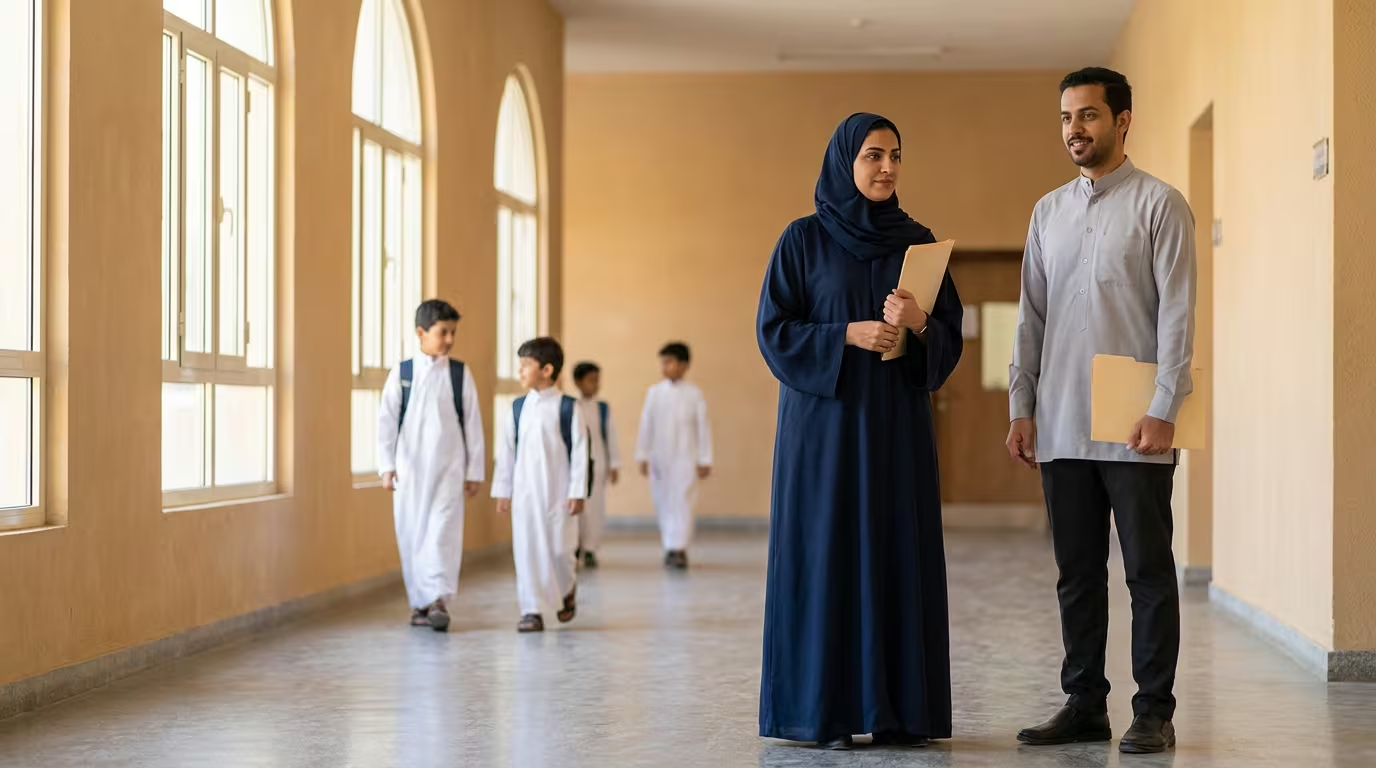
Teaching staff are often the last group considered in a school's uniform program, yet they set the tone visitors read first. This guide covers distinction from students, coordinated abayas for female teachers, comfort through a long Saudi school day, and how to build a credible program on a school budget that was never generous to begin with.
The Staff Nobody Specifies
Most Saudi schools that run a uniform program run it for students. The teaching staff, administrators, lab technicians, nursery assistants, and support teams are usually left to interpret a one-page faculty dress code on their own, which produces a corridor full of well-intentioned but inconsistent interpretations. That gap matters more than it looks. Parents form an impression of the school within moments of walking through the gate, and the people they see first are staff, not students. Prospective families and visiting partners read the same signal. A staff dress program is not about restricting teachers; it is about giving them something that removes a daily decision, holds up to the physical reality of the job, and marks them clearly as the adults responsible for the building. Treated as a procurement afterthought, staff attire becomes an annual source of complaints and ad hoc reimbursements. Treated as a small, deliberate program with its own specification, sizing cycle, and replacement plan, it quietly raises how the whole school presents itself.
Distinct From Students
In a large school, the fastest safety and safeguarding tool available is instant visual recognition of who is staff. During an evacuation drill, a crowded transition between periods, or an event with outside visitors on campus, a supervisor should be identifiable from the far end of a corridor without reading a badge. That argues for a deliberate contrast with the student uniform rather than a lighter version of it: a different color family, a more structured silhouette, and consistent placement of the identity badge at chest height where it can be read while someone is walking toward you. Distinction does not require a rigid uniform. Many schools get the effect from a defined palette plus one or two anchor pieces, such as a jacket, an over-layer, or a coordinated abaya, worn over the teacher's own conservative basics. Secondary roles benefit from the same logic: PE staff, lab technicians, nurses, drivers, and facilities teams each need to be readable at a glance, particularly by a young child looking for help.
The Coordinated Teacher Abaya
For many female teaching staff, the abaya is the outer layer worn for most of the working day, which makes it a workwear item rather than an accessory, and it should be specified like one. Schools that coordinate it usually agree a single color and a single base cloth, then allow personal choice within that frame. The practical variables are weight, drape, and opacity: a lightweight cloth is cooler but can become translucent under bright corridor lighting or classroom windows, so cover factor and color depth matter as much as fabric weight. Matte polyester crepes are common in this category because they resist creasing through a full day of sitting, standing, and board work, though they can feel warmer than open-weave alternatives. Sleeve construction deserves attention: a sleeve cut for stillness restricts reaching the top of a whiteboard, while a wider armhole and a slightly shorter, closed cuff keeps the hand free and away from marker ink. Color consistency between production batches is the detail schools most often forget to specify.
Comfort Across a Long Day
A teaching day in Saudi Arabia is not spent in one climate. Staff move between conditioned classrooms, corridors and stairwells that are often not conditioned at all, outdoor gate duty at arrival and dismissal, morning assembly, break supervision, and the walk to a car park that has been baking since dawn. Peak summer conditions in most of the Kingdom mean the outdoor portions of that day are genuinely demanding, and the garment has to work in both directions: breathable enough for the hot transitions, comfortable enough not to feel cold under a strong air conditioning outlet. Fabric choice is a set of trade-offs rather than a single right answer. Cotton and cotton-rich blends absorb moisture and feel cooler against the skin but crease and dry slowly; polyester-rich constructions dry faster, hold shape, and survive frequent laundering but can feel clammy in still air. Weave openness and garment cut often matter more than fiber content: a slightly looser body, a vented back, and lining used only where opacity requires it.
Budgeting Without Cutting Corners
School budgets rarely have a generous line for staff clothing, and that constraint should shape the specification rather than be ignored until the quotation arrives. The useful measure is cost per wear across the school year, not unit price. A cheaper garment that fades after a term, shrinks out of fit, or pills at the shoulder where a bag strap sits will be replaced mid-year at full disruption; a better-specified one worn through the year usually costs less in total. Three levers control the budget honestly. First, the issue quantity per person: a realistic rotation based on how often the school actually launders, not an arbitrary number. Second, the split between a durable anchor piece that is issued and lower-cost basics the staff member provides within a defined palette. Third, phasing, so you start with the roles where distinction matters most, then extend. Standardizing the size range across roles also reduces waste, because leftover stock from one department can be reissued to another instead of written off.
Running the Program
A staff uniform program lives or dies on the operational details rather than the design. Start with a written policy the school owns, covering which roles are in scope, what is issued versus expected, how replacements are requested, and what happens for a teacher who joins in February. Run a physical sizing day with fit samples rather than collecting sizes on a form; self-reported sizing is one of the most common causes of exchange requests later. Put the shortlisted fabric through a real wear trial with a mixed group, such as a PE teacher, a science technician, an early-years assistant, and an administrator, across at least one full laundering cycle, and ask about the specific failure points: seat seam, underarm, cuff, and color after washing. Keep a buffer of core sizes for new hires and for mid-year replacements. Manufacturing inside the Kingdom shortens the reorder cycle, which matters when a replacement is needed quickly. UNEOM has manufactured in Saudi Arabia since 2013 under ISO 9001:2015 quality management, with OEKO-TEX Standard 100 certification.
Frequently asked
- Is there a standard teacher uniform for schools in Saudi Arabia?
- Dress expectations for school staff are set at the school or operator level rather than by a single universal template, and they differ between public, private, and international schools. Before writing a specification, ask your own administration for the current written policy and any group-wide standards, then design the program around that document rather than around assumptions.
- How should teacher attire differ from student uniforms?
- Staff should be identifiable from a distance without anyone reading a badge. That usually means a different color family from the student uniform, a more structured outer piece, and consistent badge placement at chest height. During drills, transitions between periods, and visitor days, instant recognition of the responsible adult is a practical safeguarding benefit rather than a cosmetic one.
- What should a coordinated teacher abaya specification include?
- Agree one color and one base cloth, then allow personal choice within that frame. Specify weight, opacity under bright lighting, sleeve and armhole cut for board work, closure type, pocket presence, behavior after laundering, and color consistency between production batches. Shade drift between batches is a frequent complaint when a school reorders a year later.
- Which fabrics hold up best through a long, hot school day?
- There is no single winner. Cotton-rich cloth absorbs moisture and feels cooler but creases and dries slowly, while polyester-rich cloth dries quickly and holds shape through frequent laundering yet can feel clammy in still air. Blends balance the two. Weave openness, garment cut, and where lining is used often matter more than fiber content alone.
- How can a school with a limited budget start a staff uniform program?
- Start narrow and phase it. Cover the roles where distinction matters most, such as front of house, supervision, and early years, with one well-specified anchor piece, and define a palette for the basics staff already own. Run a wear trial before committing to a full rollout, and standardize sizing across departments so surplus stock can be reissued.