Seasonal Retail Staff Uniform Surges: Kitting Temporary Teams for Saudi Peak Seasons
How Saudi retailers plan seasonal retail staff uniforms for Ramadan, Eid, National Day and back-to-school peaks: forecasting volumes, coarse sizing, reusable layers, kitting and off-season storage.
Peak seasons arrive on a fixed calendar but the people who staff them do not. Ramadan, Eid, National Day and back-to-school each bring temporary colleagues onto Saudi shop floors at short notice. Dressing them well takes a different playbook from the annual uniform order: coarser sizing, reusable layers, disciplined kitting, and a plan for storage.
Four Peaks, One Floor
Saudi retail rarely runs on a single peak. Ramadan reshapes trading hours and pushes footfall deep into the night, Eid concentrates gifting and apparel demand into a short, intense window, National Day turns colour and theming into a merchandising event, and the back-to-school period stretches stationery, footwear and children's wear across several weeks. Each of these waves brings temporary colleagues onto the floor, often at short notice and frequently for a matter of weeks. The uniform problem this creates is different from the permanent one. You are not dressing a stable roster whose measurements you hold on file; you are dressing a population you cannot fully name until days before it arrives. That changes every downstream decision: which garments you buy, how you size them, how you get them to stores, and what happens to them afterwards. Treating the surge as a smaller version of the annual uniform order is the single most common way programmes end up with unworn stock in one region and bare shoulders in another.
Estimating the Wave
Forecasting a seasonal uniform buy starts with data you already own rather than industry averages that were never measured in your stores. Your own payroll and scheduling records from previous seasons tell you how many temporary badges were issued, which branches carried the heaviest load, and how long the average assignment lasted. Recruitment and manpower partners can usually confirm intake timing weeks earlier than HR systems reflect it, and store managers know which locations always request extra cover. Build the estimate branch by branch rather than as a single national number, because a mall unit in Riyadh and a high-street unit in a smaller city rarely surge together or by the same magnitude. Then decide deliberately how much cushion you are willing to hold, and record that decision as policy rather than instinct, so the following year's buyer inherits reasoning instead of a mystery quantity. Finally, agree a cut-off date after which additional garments come from a held reserve rather than a new production run, because late reorders are where seasonal programmes lose both money and calendar.
Sizing Without Measurements
Because temporary colleagues are hired late, you almost never have individual measurements, so the seasonal buy has to lean on a size curve rather than a name-by-name list. The most reliable curve is your own: pull the sizes actually issued during past seasons at each branch and let that shape the mix, adjusting for whether the cohort skews toward students, experienced retail staff, or a mixed intake. Design choices matter as much as quantities here. Garments with generous through-body cut, elasticated or drawcord waists, adjustable side tabs, and sleeve or hem allowances absorb fit error that a tailored block cannot. Modest-cut options matter too: longer body length, higher necklines, sleeve coverage that does not ride up when reaching to a top shelf, and cuts that sit comfortably over an abaya where colleagues wear one. Keep the extremes of the range in the buy even though they move slowly, because the alternative is a colleague on a busy Eid floor in a garment that does not fit, which shows immediately in photographs and in how the team carries itself.
A Layer, Not a Wardrobe
The most durable answer to a surge is not a second uniform but a layer worn over ordinary clothing to a defined dress code. An apron, a tabard, a lightweight overshirt, a vest, a branded scarf or a cap identifies a colleague clearly, costs far less to hold in inventory than a full outfit, and tolerates a wide size range across very few stock-keeping units. Set a simple base rule for what staff wear underneath, such as a plain shirt in a stated colour, closed shoes, and trousers or a skirt of a stated length, then let the layer carry the branding. Seasonal theming becomes an inexpensive swap after that: a National Day scarf over the same base, a Ramadan-tone apron, a back-to-school badge. Because back-to-school and National Day fall in the hottest part of the Saudi year, favour breathable, light-coloured layers that do not trap heat over a shirt, and that launder and dry quickly, since temporary colleagues rarely hold more than one set. Keep sizing coarse and forgiving rather than precise.
Kitting and Handover
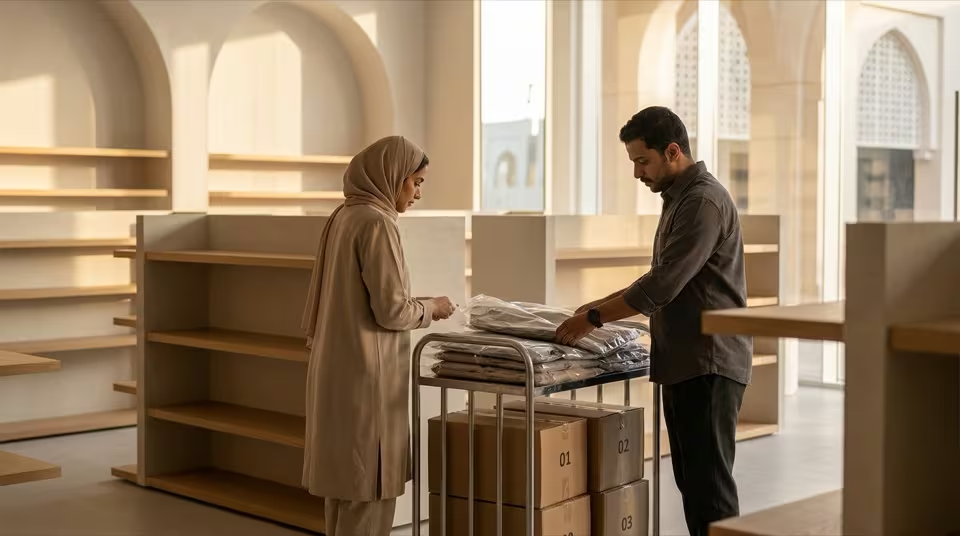
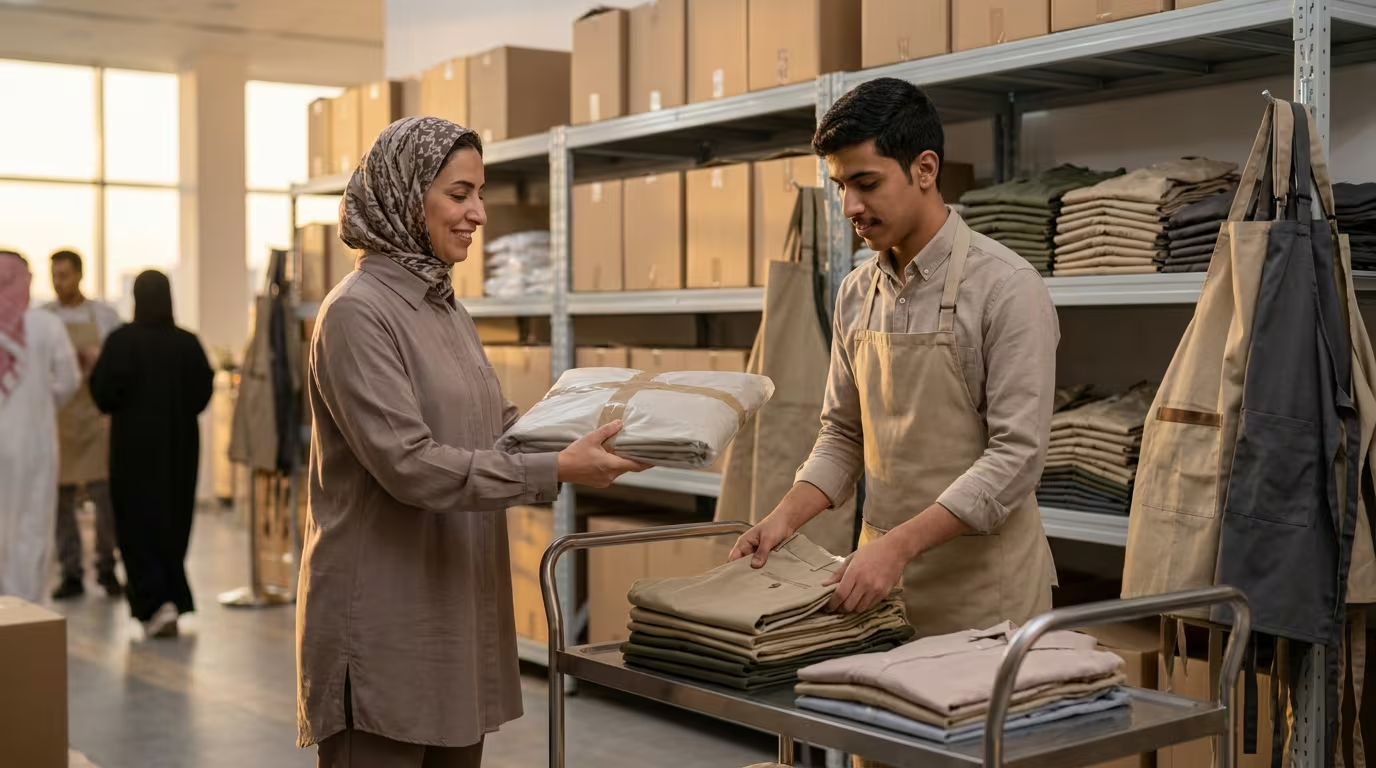
Kitting is where a seasonal programme is won or lost. Pack per person, not per carton: a sealed bag holding the layer garment in a stated size, the name badge sleeve, any seasonal accessory, and a single-page care and return note in Arabic and English. Label the outside with size and branch so a store team can hand it over in seconds on a colleague's first shift, when there is no time for a stockroom search. Ship to branches ahead of the intake date, not with it, and send the size mix each branch actually needs rather than an identical carton everywhere. Keep a modest floating reserve in a central location for exchanges, because some proportion of first issues will be the wrong size no matter how good the forecast. Record issue and return against the individual, even informally on a printed sheet, so recovery at the end of the season is a routine step rather than an argument. The handover conversation is also the moment to state the standard: how the garment is worn, and how it comes back.
Storage and the Permanent Line
Recovered garments are only an asset if they survive the gap. Launder before storage, because residual body soil and food staining set over months and attract pests, then dry fully; anything stored damp in a humid coastal store room in Jeddah or Dammam will come back marked. Fold soft items flat in sealed, labelled boxes by size, hang structured pieces where you can, keep everything off the floor and away from direct sunlight, and store in the coolest, driest space available rather than a rooftop or a service corridor. Count what goes in and what comes out, and inspect on the way out rather than the way in, so replacement volumes are known before the next intake. Finally, draw a line between temporary and permanent kitting: when a seasonal role repeats reliably year after year, or a colleague converts to a permanent contract, move them onto the standard uniform with individual fitting, a full set, and a replacement cycle. The surge kit is designed for speed and tolerance; it is not designed to be worn all year.
Frequently asked
- How many uniforms should we order for a seasonal hiring surge?
- Start from your own history rather than a rule of thumb: how many temporary badges each branch issued last season, how long assignments ran, and which locations always ask for cover. Build branch by branch, add a cushion your policy defines rather than instinct, and set a cut-off after which extras come from reserve stock, not a new run.
- Should temporary staff get the same uniform as permanent staff?
- Rarely the full set. Temporary colleagues usually need identification and a consistent look, which an apron, tabard, overshirt or branded scarf over a stated base outfit delivers at a fraction of the inventory burden. Move someone onto the standard uniform, with individual fitting and a replacement cycle, when the role repeats every year or the contract converts to permanent.
- What sizes should we stock when we cannot measure temporary staff?
- Lean on a coarse size curve drawn from what your branches actually issued in past seasons, adjusted for the cohort you expect. Choose forgiving cuts with drawcord or elasticated waists, adjustable tabs and generous length, and include modest-cut options. Keep the range extremes in the buy even though they move slowly, and hold a central reserve for exchanges.
- How do we store seasonal uniforms between peaks?
- Launder and dry everything fully before it goes away, since stored soil sets and attracts pests, and damp storage in humid coastal cities leaves marks. Fold soft items into sealed, labelled boxes by size, keep them off the floor, out of sunlight, and in the coolest dry space you have. Count in, and inspect again on the way out.
- Can seasonal uniform pieces be reused across different seasons?
- Yes, if the design separates the permanent part from the seasonal part. Keep a neutral, year-round base layer in brand colours and change only the inexpensive accents: a National Day scarf or pin, a Ramadan-tone apron, a back-to-school badge. The base stays in circulation across peaks while the themed items are small, cheap and easy to store.