School Uniform Tenders in Saudi Arabia: How to Specify and Compare Bids
A practical guide to writing school uniform tender documents in Saudi Arabia: specifying fabric and fit, setting evaluation criteria, requesting samples, and tying delivery to the academic calendar.
School uniform tenders rarely fail because the wrong supplier won. They fail because the specification let every bidder quote a different garment. A document that names fabric construction, finished measurements, test methods, samples and delivery dates turns scattered offers into a genuine comparison — and turns the award into a uniform that survives the school year.
Why Vague Specs Break Comparison
Most school uniform tenders receive bids that cannot honestly be compared, and the cause is usually written into the tender itself. Phrases like durable fabric, good quality cotton blend, or standard school shirt allow every bidder to price a different product, so the lowest number wins on paper and disappoints in the corridor. A supplier quoting a light, loosely constructed poly-cotton and a supplier quoting a denser, tightly woven cloth are both technically compliant with a vague sentence, yet the two garments behave differently after a term of daily wear and repeated laundering. The fix is not longer documents; it is more specific ones. Every requirement that matters to the school should be written as something a bidder can quote against and a receiving committee can verify: fibre composition, fabric construction, mass per unit area class, colour reference, finished measurements, and the test methods used to demonstrate performance. Anything the school cannot verify on delivery should either be removed from the specification or backed by a document the bidder must submit.
Writing the Fabric Clause
A fabric clause becomes comparable when it describes the cloth the way a mill does. State fibre composition as percentages with an accepted tolerance, then state construction: woven or knitted, weave or knit type, yarn count or linear density, and the mass per unit area band you will accept with an upper and lower limit rather than a single figure. Name the colour by a recognised reference and require a physical shade standard, because colour named in words drifts between suppliers and between production lots. Performance is where most tenders overreach. Rather than inventing pass marks, name the test methods for the properties that actually matter in Saudi school use — colourfastness to washing, to perspiration and to light, dimensional change after repeated laundering, pilling resistance, seam slippage and tensile or bursting strength — and require the bidder to submit mill or laboratory reports against those methods. Set your acceptance levels from a benchmark garment your school already uses, from the standard's own classification, or from a specialist review, and say plainly which document governs.
Cut, Sizing and Modesty
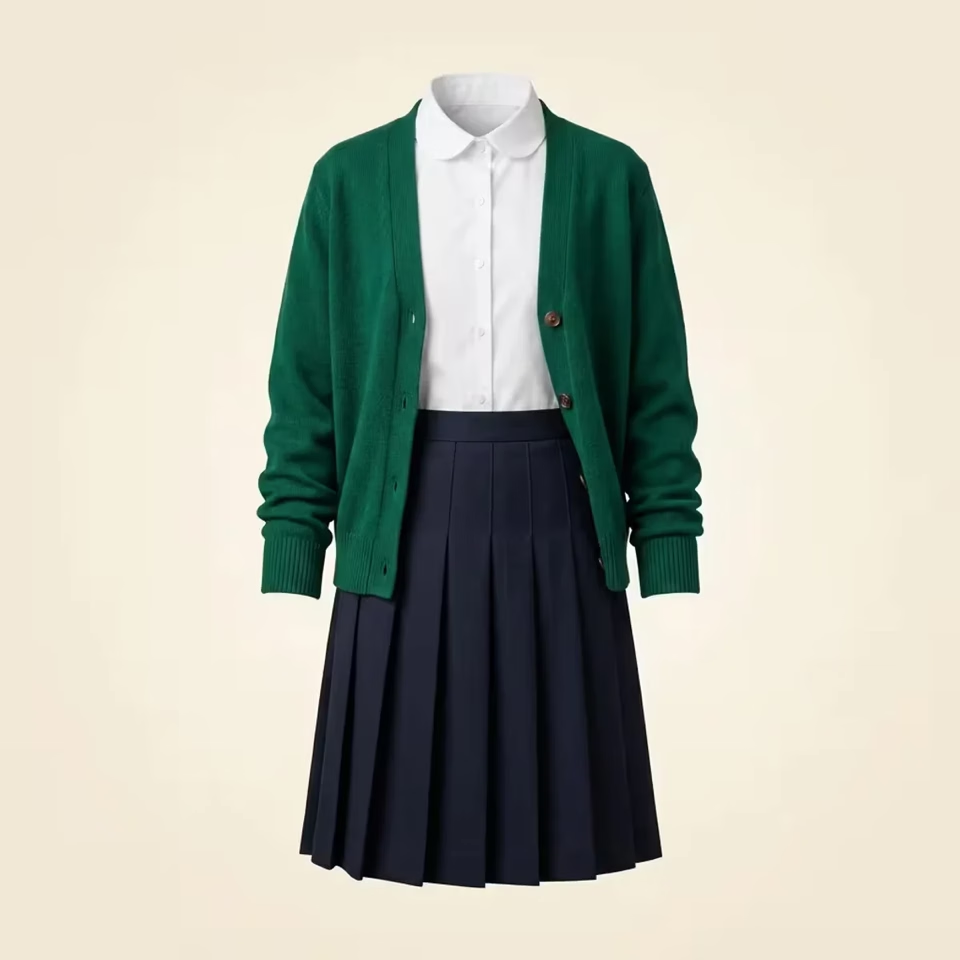
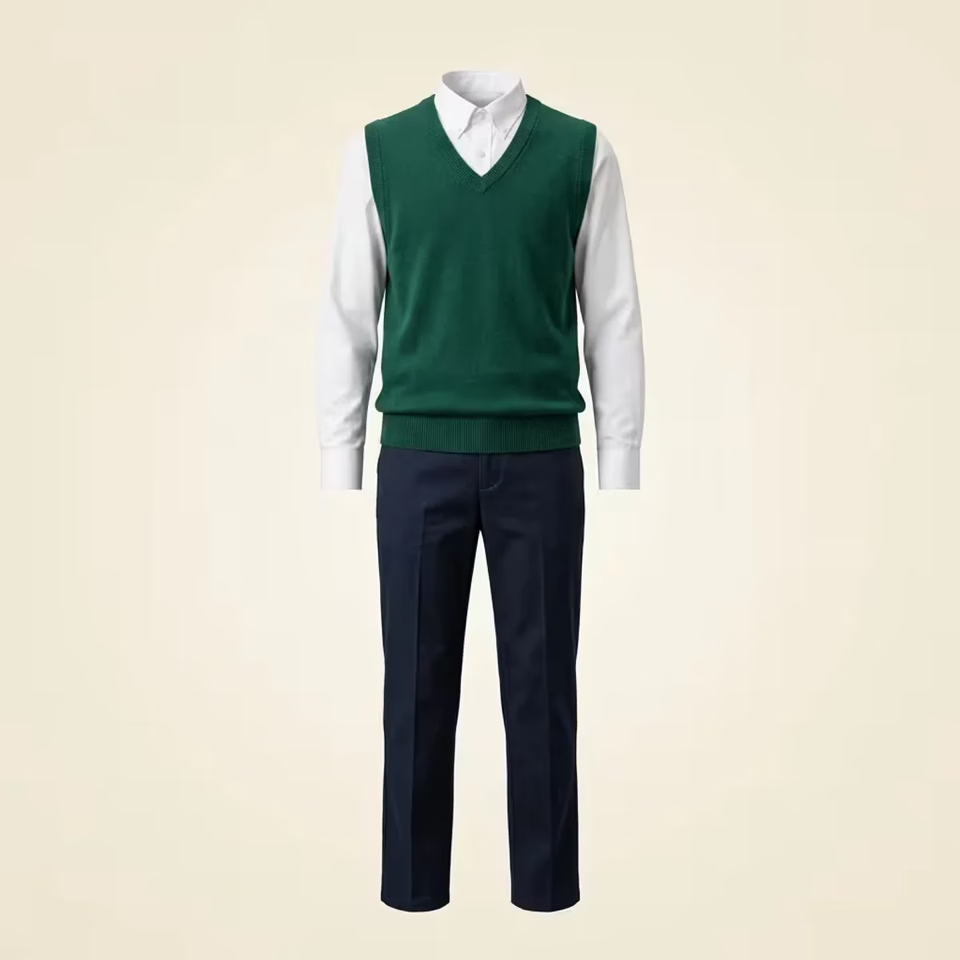
Cut is specified through finished measurements, not adjectives. Build a size chart that lists the garment measurements you require at each size — chest, shoulder, sleeve, body length, waist, hip, inseam — with a stated tolerance per point, and make clear whether the numbers are body measurements or finished garment measurements, because confusing the two is a common source of dispute. Describe construction details that drive durability and appearance: seam type and stitch density, whether seams are overlocked or double-needle felled, pocket and placket construction, button and fastener type, interlining at collars and cuffs, and how care and size labels are applied. For Saudi schools, write modesty requirements as measurable geometry rather than intent: minimum sleeve and hem lengths, neckline coverage, opacity of light-coloured cloth, and whether an overlayer, pinafore or tunic is part of the set. Cover the whole wardrobe in one chart — daily uniform, winter layer, physical education kit, and any lab or workshop garment — so bidders price the same scope and no item appears later as a variation.
Evaluation Criteria That Hold
Evaluation criteria decide what kind of supplier you attract, so publish them before bids open. Separate qualification from scoring: qualification items are pass or fail — legal and commercial standing, required registrations, capacity to produce and deliver the quantities in the stated window, and the mandatory documents — while scored items compare compliant offers on technical merit, sample quality, service model and price. State the weight of each scored element and the method used to score price, because an unstated method invites challenge. Define how deviations are handled: whether an alternative fabric may be offered, how it must be declared, and who rules on equivalence. Note also who evaluates, how sample scoring is recorded, and how ties are resolved. If your school operates under a public or semi-public procurement framework, the permitted structure of criteria, timelines, notice periods and objection routes are set by that framework and its tender document rather than any template — read the issued conditions and confirm the details with the competent authority before you publish.
Samples and Approvals
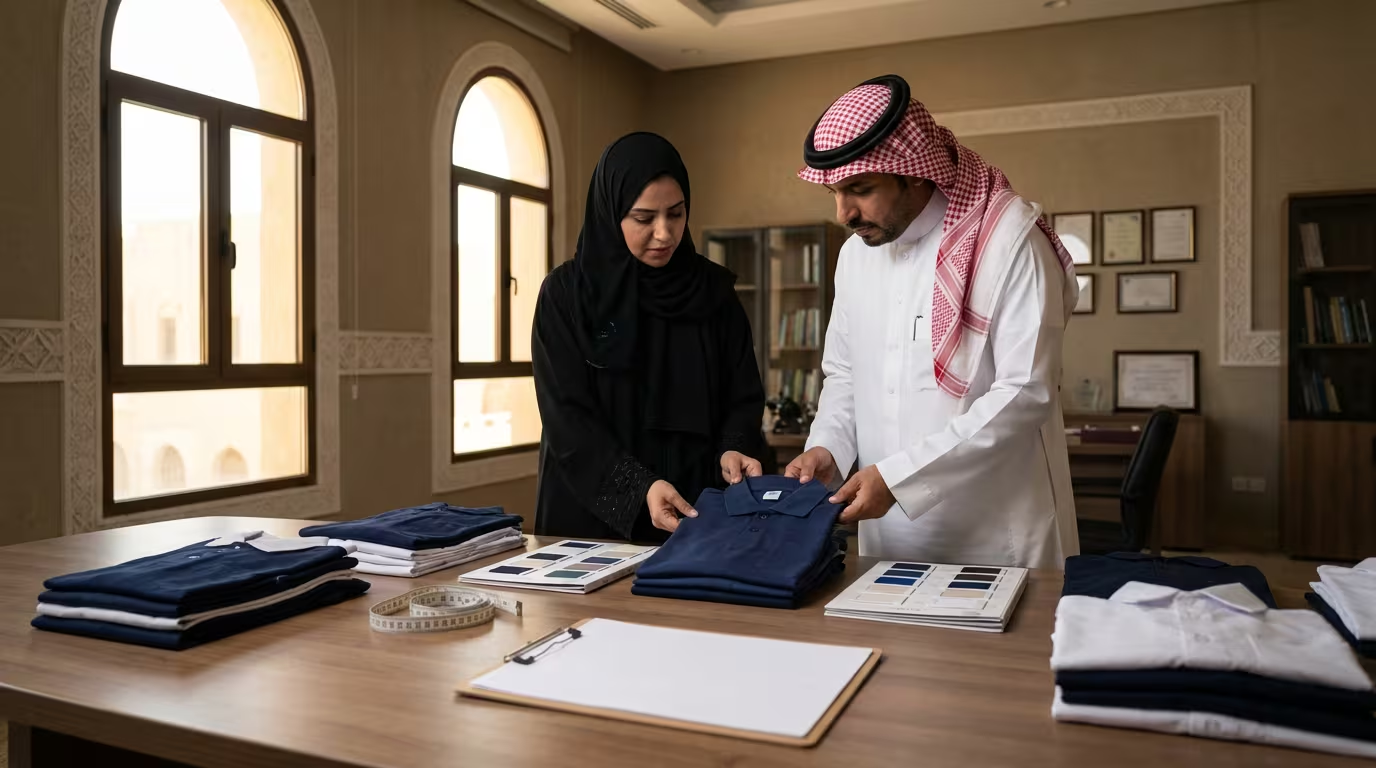
Samples turn a paper specification into something you can touch, but only if you ask for the right ones at the right moments. At bid stage, request a complete set in the sizes and colours you will actually buy, produced to the tender's own measurements, plus fabric swatches large enough to wash and rub. Score those samples against a written checklist rather than impressions, and keep one sealed copy of the winning submission as the contractual reference. After award and before bulk cutting, require a pre-production sample from the mill lot that will feed the order, so shade, hand feel and shrinkage are confirmed on the real cloth rather than a showroom piece. Include a size set — one garment in each size — to verify that the grading holds across the range and not only at the middle sizes. Then define what happens at delivery: how many cartons are opened, which measurement points are checked, who signs, and what constitutes a rejected lot. Approvals recorded this way settle disputes quickly.
Calendar, Quality and Replacement
A uniform contract lives or dies on its calendar. Work backwards from the first day of term: an opening delivery for confirmed enrolment, a second wave for late registrations, and a standing replenishment window that runs through the year, each with its own date, quantity basis and delivery point. Say how the size curve is agreed and what happens when actual demand differs from the forecast, because it always does. Then write the after-sale terms most tenders leave vague. Define the exchange window for wrong sizes in unworn condition, the remedy for manufacturing defects such as seam failure, broken fasteners or shade variation between cartons, and the response time expected for each. Require the supplier to hold the approved shade and pattern for repeat orders through the contract term, so a mid-year replacement matches the class, and to notify the school before changing any cloth or component. Add continuity terms: stock cover, reorder lead time, and handover of patterns at contract end. In-Kingdom manufacturing shortens that loop; UNEOM has produced uniforms in Saudi Arabia since 2013 under ISO 9001:2015, with OEKO-TEX Standard 100 certification.
Frequently asked
- What should a school uniform tender specify about fabric?
- Name fibre composition with a tolerance, construction — woven or knitted, weave type, yarn count — and an accepted range for mass per unit area rather than one figure. Add a physical shade standard, the test methods for colourfastness, shrinkage, pilling and strength, and require the bidder's mill or laboratory reports against those methods.
- How many samples should we request in a school uniform RFP?
- Request a full set at bid stage in the sizes and colours you will buy, plus washable fabric swatches. After award, require a pre-production sample from the actual mill lot and a size set covering every size, so grading and shade are confirmed before bulk cutting begins.
- How should we weight price against quality?
- Publish the weights before bids open and score price by a stated method. Keep legal standing, capacity and mandatory documents as pass-or-fail qualification, then weight technical compliance, sample quality and service against price. If you operate under a public procurement framework, the permitted structure is set by that framework and its tender document.
- How do we tie delivery to the academic year?
- Work backwards from the first day of term. Set an opening delivery against confirmed enrolment, a second wave for late registration, and a replenishment window open through the year, each with its own date and delivery point. State how the size curve is agreed and what happens when demand differs from forecast.
- What quality and replacement clauses matter most?
- Define an exchange window for wrong sizes in unworn condition, a remedy path for manufacturing defects such as seam failure, broken fasteners or shade variation between cartons, and a response time for each. Require the approved shade and pattern to be held for repeat orders, with written notice before any change of cloth.