School Uniform Procurement Timeline: A Month-by-Month Plan for Saudi Schools
A month-by-month school uniform procurement timeline for Saudi schools: when to review the spec, gather sizes, approve samples, and take delivery before term one.
A school uniform procurement timeline in Saudi Arabia works backwards from the first day of the academic year in August. Review the specification during the first term, collect sizes before the mid-year break, approve samples in early spring, release bulk production well before summer, and take delivery weeks before doors open. Every gate you miss compresses the next.
Work Backwards From Day One
Every workable school uniform procurement timeline is built in reverse. Fix the immovable date first — the first morning of the academic year, when a child either has a uniform in the right size or does not — then place each earlier milestone against it with honest allowances rather than optimistic ones. Saudi schools open in August, which means the real pressure point is not the delivery date but the sizing date, several months earlier, when families are still thinking about mid-year exams rather than next year's shirts. Working backwards also exposes the dependencies most schools discover too late: samples cannot be approved before the specification is settled, bulk fabric cannot be committed before samples are approved, and nothing can be cut before size quantities are confirmed. Each of those links is a gate, not a suggestion. A procurement officer who maps the gates once, in writing, and circulates the dates to school leadership, the finance office and the parent community usually never has to run an emergency order in August.
First Term: Review the Specification
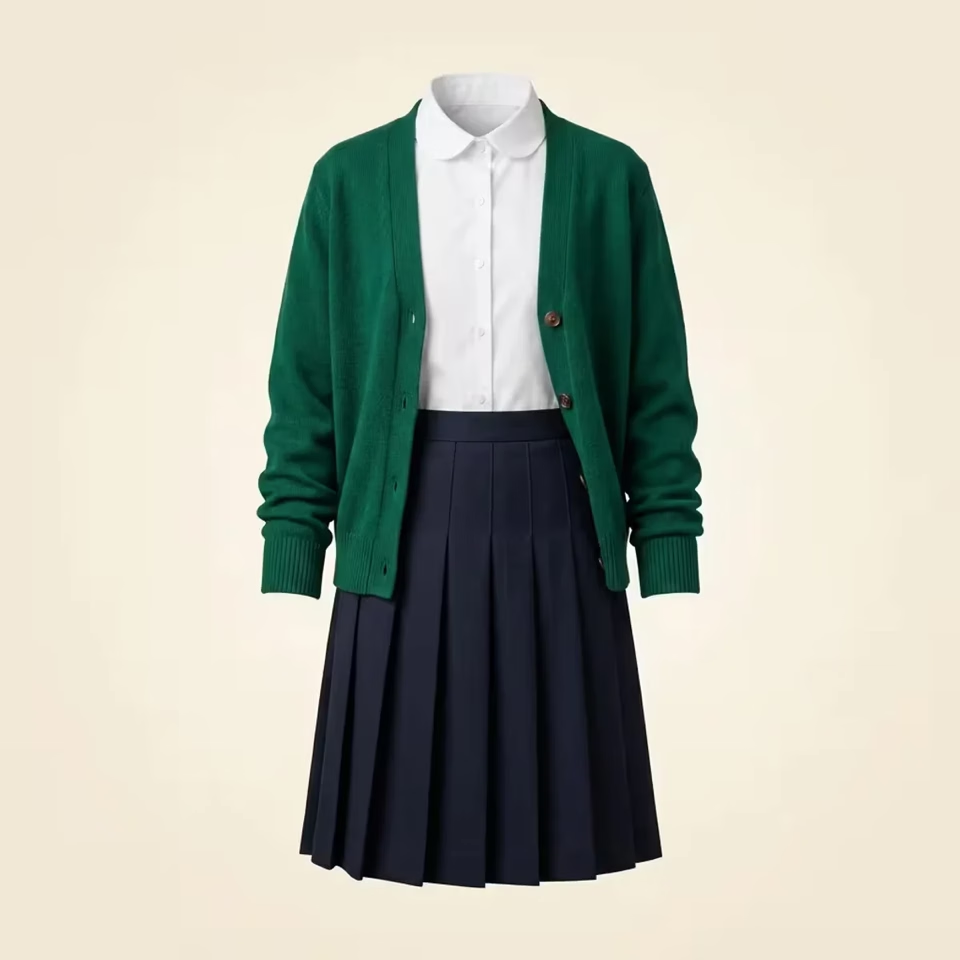
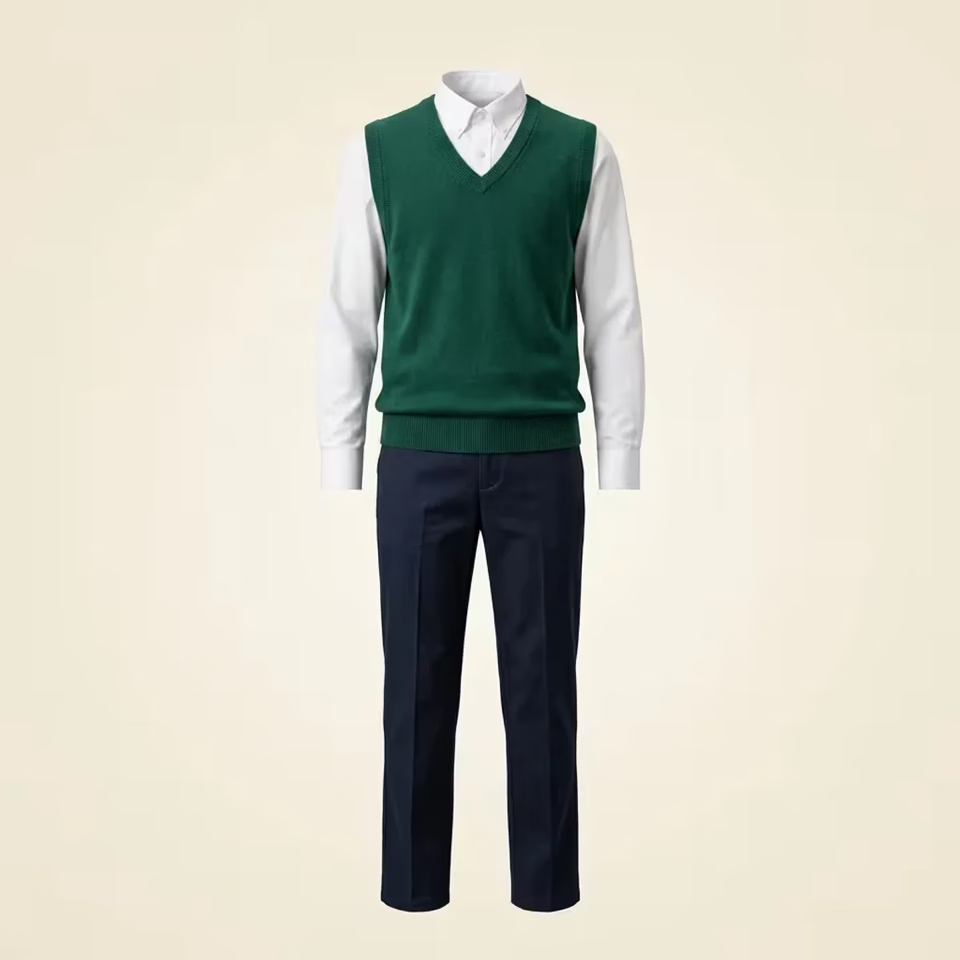
The specification review belongs in the first term, while last year's uniform is still on the children in front of you and its weaknesses are visible. In most Saudi schools that means November or December. Walk the corridors and look for the honest evidence: collars that have greyed, knees that have gone through, colours that have drifted after a term of hot washing and strong sun, seams that opened at the underarm. Convert what you see into specification language — fabric weight and blend, colour fastness expectations, seam construction at stress points, and the cut that keeps modesty intact through a full day of movement. August and September are still punishing months in the Kingdom, so the opening weeks argue for a lighter, breathable construction with enough polyester content to hold shape and resist wrinkling through repeated laundering. Settle the logo method, the care label and the size chart in the same review. Finish the term with an approved written specification and a shortlist of manufacturers, not a vague intention to reorder.
Sizing: The Gate That Slips
Size collection is where school uniform ordering schedules break. Aim to complete it before the mid-year break and treat the closing date as hard. The reliable method is a measured sizing day: bring a full size set of actual garments to the school, let each student try them on, and record the size a teacher or supervisor has verified rather than the size a parent estimated from memory. Children grow between the measurement and the first day of school, so agree a growth allowance rule with your manufacturer and apply it consistently instead of leaving each family to round up on its own. Capture the data in one shared sheet with student name, class, section and garment line, and reconcile it against the enrolment list so no child is missing. Build in an allowance for new admissions arriving over the summer, and hold a reserve of the middle sizes rather than the extremes. Publish the deadline to parents twice, then close it — late confirmations, more than any other factor, push delivery past the opening bell.
Samples and Sealed Approval
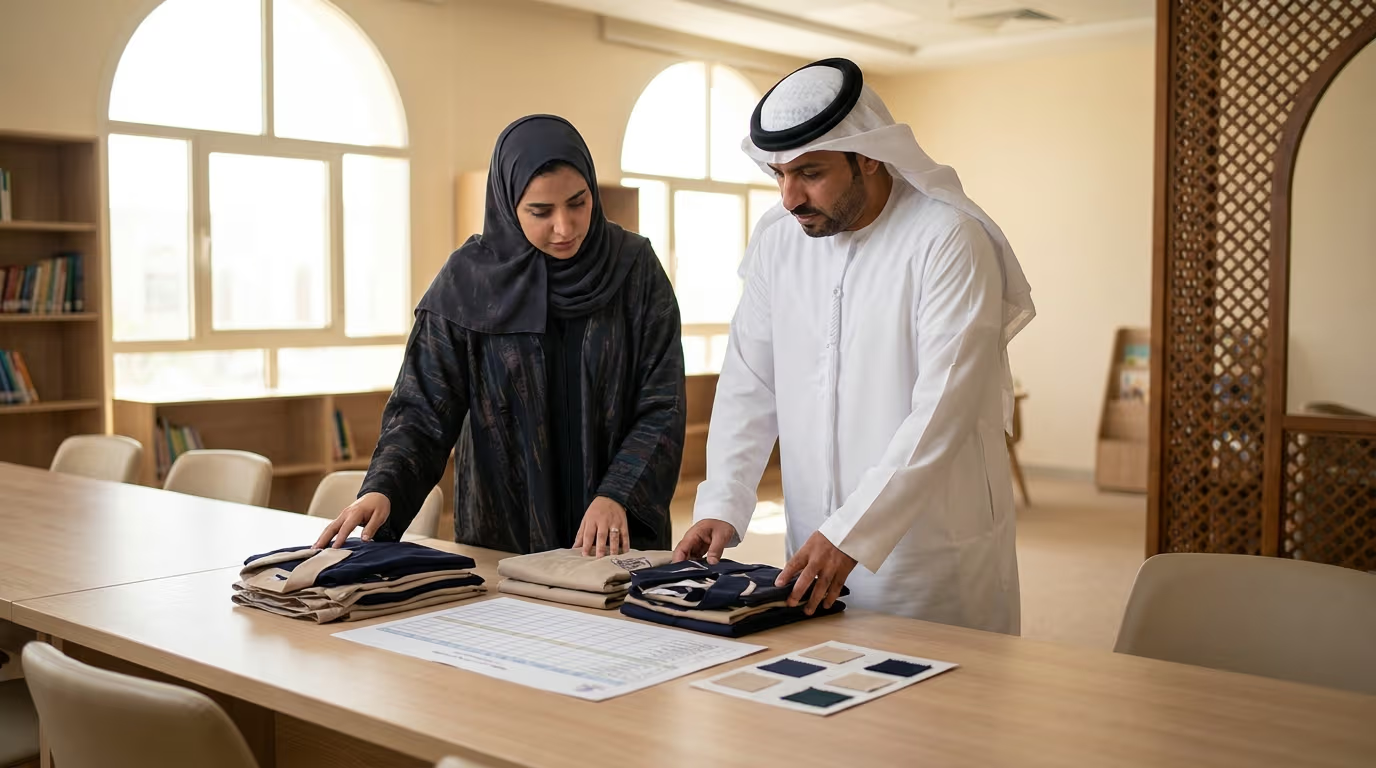
Once the specification is fixed, ask for pre-production samples and give yourself time for one honest round of revision. In a typical Saudi school year this belongs in the second term, comfortably before the summer. Do not judge a sample on a hanger. Put it on real students of different builds, let them sit, raise their arms, kneel and run in it, and watch whether the cut still respects modesty when a girl bends to pick up a bag. Then wash it the way families actually wash — the household machine, the locally available detergent, the sun — and look again at colour, shrinkage, seam behaviour and how the logo has survived. Only after that should you sign a sealed sample, retained by both the school and the manufacturer, as the physical reference the bulk run will be judged against. Approve the colour standard at the same moment, because shade drift between lots is the complaint that surfaces in September when two classes stand side by side and their shirts do not match.
Production: Book the Line Early
School uniform lead time in Saudi Arabia is governed less by sewing speed than by queue position. A full school's requirement moves through fabric sourcing or dyeing to the approved shade, cutting, sewing, logo application, inspection and packing, and each stage is a batch process measured in weeks rather than days. The complication is that every school in the Kingdom wants the same production window, so a purchase order released in spring is treated very differently from the same order released in July. Imported fabric adds shipping and clearance time to the front of that queue; locally manufactured programmes shorten the loop and make a mid-run correction possible instead of catastrophic. Two Saudi realities deserve a line in your plan: Ramadan and the Eid and Hajj holidays move earlier each Gregorian year and reduce working days in whatever month they land, and summer heat makes late fabric transport and storage a quality question, not only a logistics one. Ask for staged delivery by grade so the first cartons arrive early enough to be checked.
Delivery and Recovery
Take delivery with weeks to spare, not days. The gap between the cartons arriving and the first assembly is your only chance to inspect against the sealed sample, count by size and garment line, and catch a shortfall while it can still be sewn. Plan distribution days before the term opens, with a staffed exchange desk, and tell families in advance that exchanges are welcome within a defined window — some garments always need swapping however carefully the sizes were taken, which is why a reserve of middle sizes is a planning tool rather than a waste. If the schedule has already slipped, do not spread the shortage evenly. Prioritise the youngest grades and new joiners, who have nothing to fall back on, allow older students a temporary arrangement, and agree a firm second-shipment date rather than a vague promise. Then, in the first weeks of term while memory is fresh, write down where the timeline actually failed and move next year's dates accordingly.
Frequently asked
- When should a Saudi school start its uniform procurement timeline?
- Begin during the first term of the current academic year. The specification review sits in November or December, sizing before the mid-year break, sample approval in the second term, and bulk production across spring so delivery lands weeks before August. Starting later is possible, but every month lost is taken out of the sizing window or the inspection buffer.
- How long is school uniform lead time in Saudi Arabia?
- Plan in weeks rather than days, and ask each manufacturer for a written lead time counted from the date the confirmed size list is received, not the date the contract was signed. Locally produced programmes are shorter because imported fabric adds shipping and clearance ahead of cutting. Orders released in peak season also queue behind other schools, which lengthens everything.
- What happens if parents confirm sizes late?
- Late confirmation is the most common reason a delivery misses the opening week, because nothing can be cut until quantities are fixed. Protect the main run: close the list on the published date, release it to production, and collect late names into a small second batch. Holding the whole order for a handful of families penalises everyone else.
- What should a school uniform specification cover?
- At minimum: fabric blend and weight, colour fastness expectations, cut and modesty requirements, seam construction at stress points, logo method, care labelling and a documented size chart with a growth allowance. For garments worn against children's skin through a long school day, ask suppliers where a certification such as OEKO-TEX Standard 100 sits in their process.
- How much buffer stock should a school hold?
- Hold a reserve rather than a formula. Weight it towards the middle sizes that fit the most students, cover summer admissions and the exchanges that always follow distribution, and agree in advance how a small mid-year top-up will be produced and priced. A reserve that sits unused for one term is cheaper than a child without a uniform.