International School Uniform Programmes in Riyadh: Standards, Houses and Summer Heat
How international schools in Riyadh build uniform programmes that hold house colours, respect modesty, survive summer heat, and still work at a busy parent-pay uniform shop.
International school uniform programmes in Riyadh sit between two pressures: a visual tradition parents recognise from abroad, and a climate and culture that will not bend to it. Add a house system, a parent-pay shop and an August rush, and the specification becomes a programme in its own right. This is how the parts fit together.
A different buying logic
An international school in Riyadh does not buy uniforms the way a factory or a hospital does. There is rarely a single budget holder issuing kit to staff; instead the school defines an identity and a policy, and families buy against it, garment by garment, often on the same weekend in August. That changes everything about the specification. Volume is not committed up front, it is discovered through a size curve. Quality is judged one child at a time, by a parent inspecting a seam at the kitchen table, not by a stores manager signing a delivery note. Complaints arrive individually and publicly. The buying committee usually blends school leadership, a business or operations manager, and a parent voice, each weighing a different risk: identity, cash flow, and fairness of cost. A supplier who treats the account as a bulk contract will misjudge stock depth, sizing and the retail rhythm. The programme is closer to a small, tightly branded clothing line with a fixed launch date than to a conventional workwear tender.
Houses and colour control
House systems are the reason colour control matters more here than in almost any other uniform category. A school may run several houses, each with a colour that appears on a polo, a tie stripe, a PE top, a badge and sometimes a sports sock, produced on different fabrics by different processes in different months. Cotton pique, polyester interlock, woven tie cloth and embroidery thread will never take the same dye identically, and a shade that looks correct under factory lighting can drift under a sports hall's lamps. The practical answer is to fix each house colour against a physical reference, approve a lab dip and a sealed production sample for every fabric and trim, and keep those references with the school as well as the supplier. Batch continuity matters even more than first-batch accuracy: a child who replaces one polo mid-year should not stand out on sports day. Agree in writing what degree of variation is acceptable, who judges it, and what happens when a batch fails.
Blazers, ties and Riyadh heat
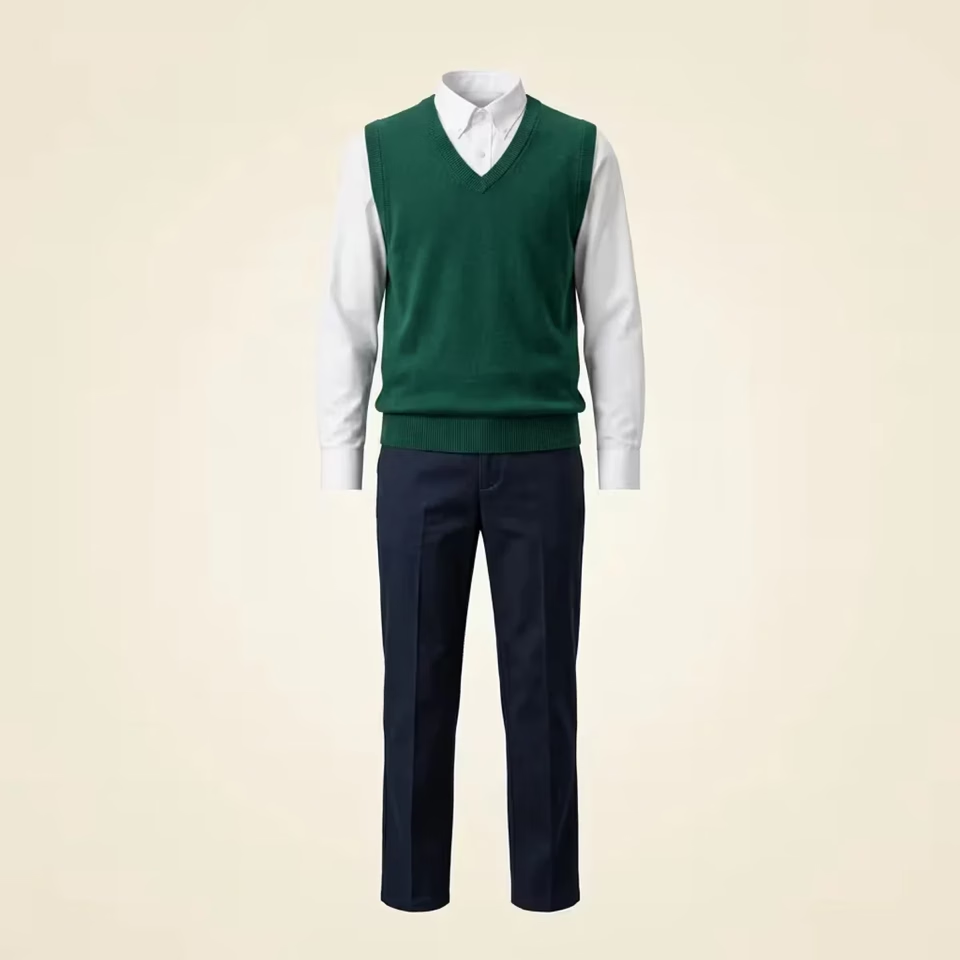
The blazer and tie carry most of the emotional weight in a British-tradition school, and most of the thermal risk in Riyadh. Parents who grew up with heavy worsted wool often expect the same silhouette, while the child wearing it will cross a car park at midday in June. The honest resolution is to keep the shape and lose the mass: lighter suiting weights, unlined or half-lined bodies, breathable weave structures, ventilated back linings, and a construction that survives repeated wear without pressing. Polyester-rich blends hold colour and crease recovery well and wash easily; wool-rich blends drape and recover better but demand more care and cost more. Neither is universally correct, and the choice belongs to the school once the trade-off is explained plainly. It also helps to define when the blazer is actually worn. Many programmes reserve it for assemblies, arrivals, photographs and off-site events, and let a knitted or lighter layer serve indoors, which reduces heat exposure without diluting the identity parents value.
Everyday wear and modesty
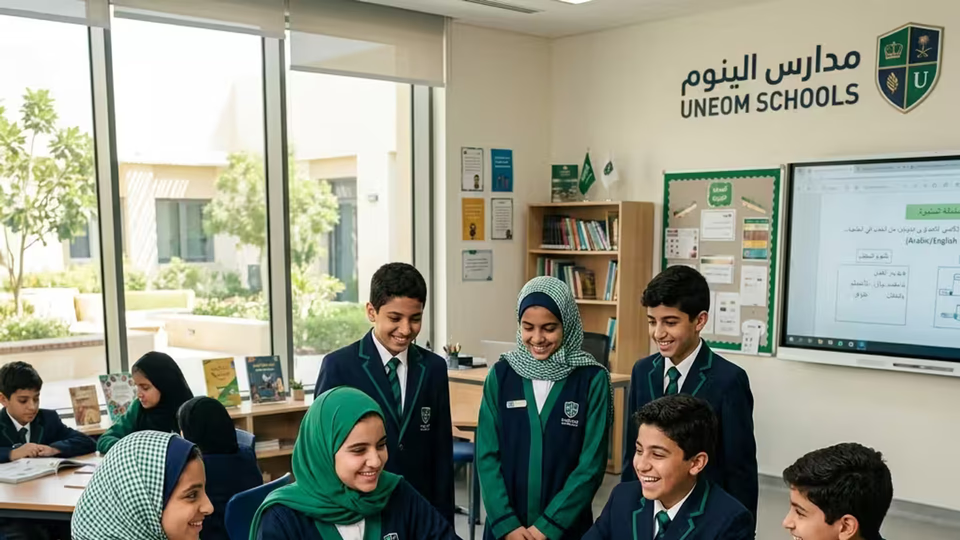
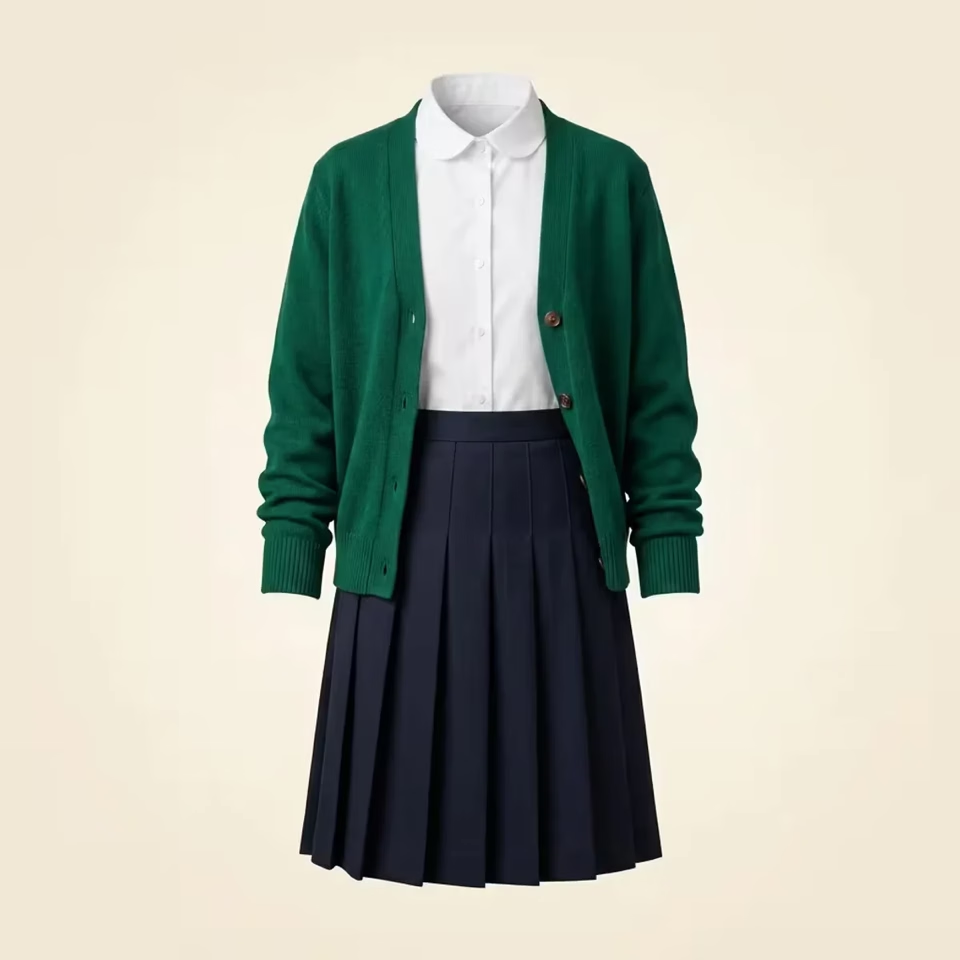
Everyday wear is where a Riyadh programme quietly diverges from an imported catalogue. Modesty expectations shape the range: longer tunics and pinafores, a trouser option for girls, sleeve and hem lengths that work when a child sits cross-legged, and headscarves offered in the school's own colours rather than left to families to improvise. Opacity deserves specific attention, because pale shirts and light polos can become translucent when thin, when stretched over a growing frame, or when damp after break time; a slightly heavier construction or a tighter knit is usually a better answer than adding a layer in the heat. Fibre choice follows use rather than fashion: cotton-rich knits feel cooler against the skin and wash well, engineered polyester and blends dry faster and hold shape through frequent laundering, and each has a cost. PE kit needs the widest thinking, since it must respect the same modesty expectations while allowing movement and drying quickly between periods. Write these decisions into the policy so families read one consistent standard.
The uniform shop
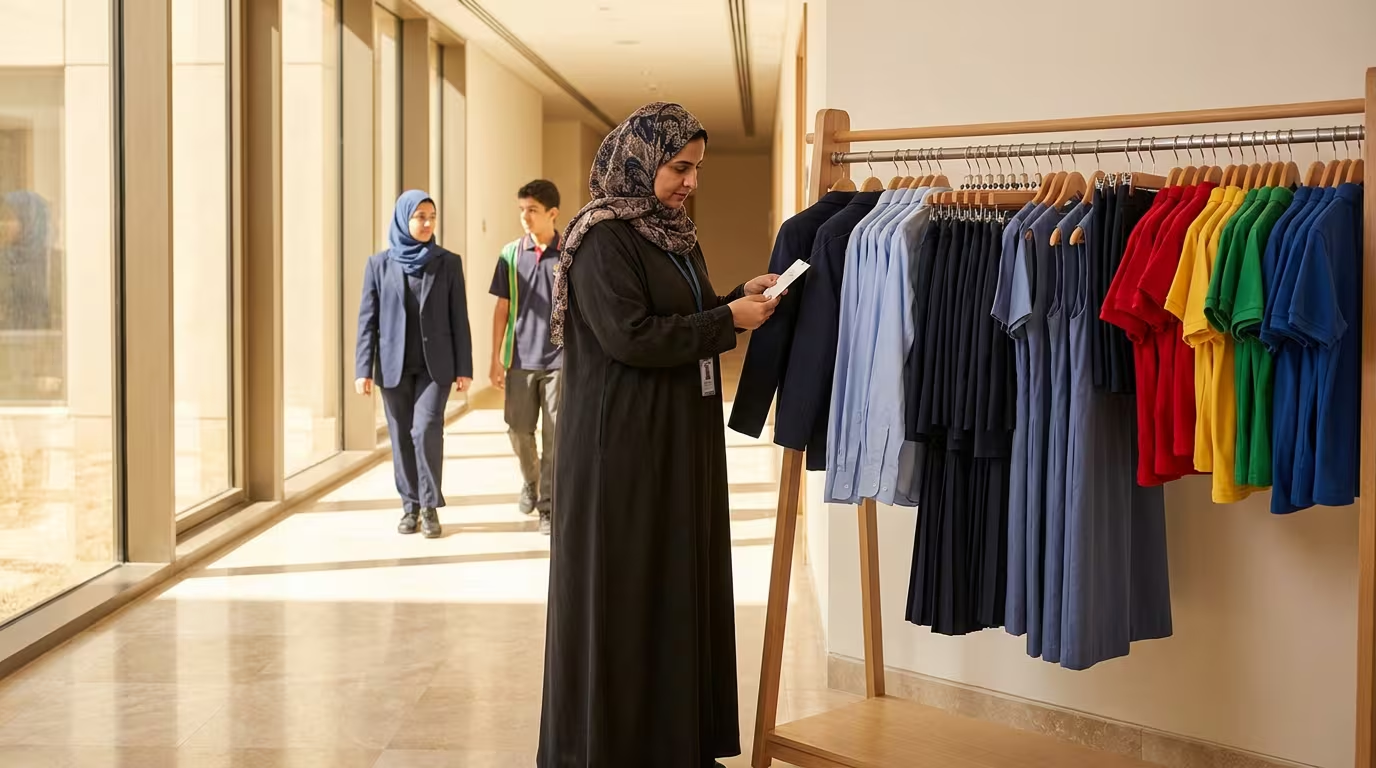
The uniform shop is the part of the programme parents actually experience, and it fails in predictable ways. Demand is compressed into the weeks before term, so a size curve built from last year's actual sales, not from a flat spread, decides whether families leave with a full set or a promise. Growth does not pause for the academic calendar, which means mid-year replacement depth matters as much as the opening order, particularly in the fastest-growing age bands and in the garments that wear out first. Fitting events, clear size guides with real body measurements, and a simple exchange rule prevent most disputes. Name tapes, badge application and embroidery need a stated turnaround so a same-day purchase is not undermined by an open-ended wait. New joiners arrive all year, and transfers arrive without warning. Decide early who carries the stock risk, how reorders are triggered, and how pre-loved schemes fit alongside new sales, because ambiguity there becomes a queue at the counter in the first week.
Specification and governance
Treat the uniform as a controlled specification rather than a seasonal purchase. A working document should name every garment, its fabric construction, the colour reference, trims, badge position, size range, care labelling and the sealed sample that settles arguments. Uniform policy is set by the school itself, not by a curriculum body, so the document is also where an IB or British-curriculum school records how tradition, climate and modesty were balanced, and why. Review it annually with the people who see failures first: the shop, the nurse, PE staff and the parent body. Changes should be phased, with a grace period, because families who bought in good faith will not replace a wardrobe on short notice. Supply proximity matters more than it looks: manufacturing inside Saudi Arabia shortens the loop between a fitting-day shortage and a delivery, and makes sample approval a conversation rather than a shipment. UNEOM has manufactured in the Kingdom since 2013, works to ISO 9001:2015, and holds OEKO-TEX Standard 100 certification, a point worth raising with parents when garments sit against a child's skin all day.
Frequently asked
- How is an international school uniform programme in Riyadh different from a corporate uniform contract?
- Volume is not committed in advance; families buy garment by garment against a school policy, so the supplier carries sizing, stock depth and retail timing risk. Quality is judged individually by parents rather than by a stores manager, and the whole year's demand compresses into the weeks before term. Plan the account as a small clothing line with a fixed launch date.
- Can we keep a traditional blazer in Riyadh's climate?
- Yes, if you keep the silhouette and reduce the mass. Lighter suiting weights, unlined or half-lined bodies and breathable weave structures preserve the look with less heat load. It also helps to define when the blazer is worn, such as assemblies, arrivals, photographs and off-site events, and allow a lighter layer indoors. Wool-rich and polyester-rich blends each trade comfort against care and cost.
- How do we stop house colours drifting between batches?
- Fix each colour against a physical reference, approve a lab dip and a sealed production sample for every fabric and trim, and hold copies at both the school and the supplier. Different fibres and constructions take dye differently, so continuity is managed garment by garment. Agree in advance what variation is acceptable and who decides when there is a dispute.
- What modesty options should an international school range include?
- Commonly, longer tunics or pinafores, a trouser option for girls, considered sleeve and hem lengths, headscarves in school colours, and PE kit that allows movement while meeting the same expectations. Opacity matters too, since pale fabrics can become translucent when thin or damp. The school sets the policy; the range should make following it easy.
- When should we start planning for the new academic year?
- Work backwards from fitting days rather than from the first day of term. Design decisions, sample approval, colour sign-off, size-curve review and embroidery capacity all sit ahead of production, and any change to the policy needs a communication window for families. Ask your supplier for its own lead times in writing and build the calendar around them.