
Retail Brand Transformation: From Mid-Tier to Premium Through Uniform Redesign
A 14-store retail chain repositioned from mid-tier to premium pricing — using uniform redesign as the most visible signal of the brand shift. Within 6 months, average transaction value increased 28% and customer NPS shifted decisively toward premium descriptors.
- Client
- Retail chain, mid-to-premium repositioning — 14 stores, 180 staff
- Duration
- 10 weeks (design to full deployment)
- Headline
- 180 staff
- Scope
- Brand repositioning programme, custom design, premium fabric upgrade, wool-blend tailoring at scale
The numbers.
across 14 stores during a 10-week brand repositioning window — from polo-and-trouser to wool-blend tailoring.
in average transaction value during the 6 months post-rollout — the single largest ATV shift in the chain's history.
customer Net Promoter Score shifted: "premium" and "luxury" descriptors increased 34%, while "standard" and "basic" decreased 41%.
The repositioning imperative
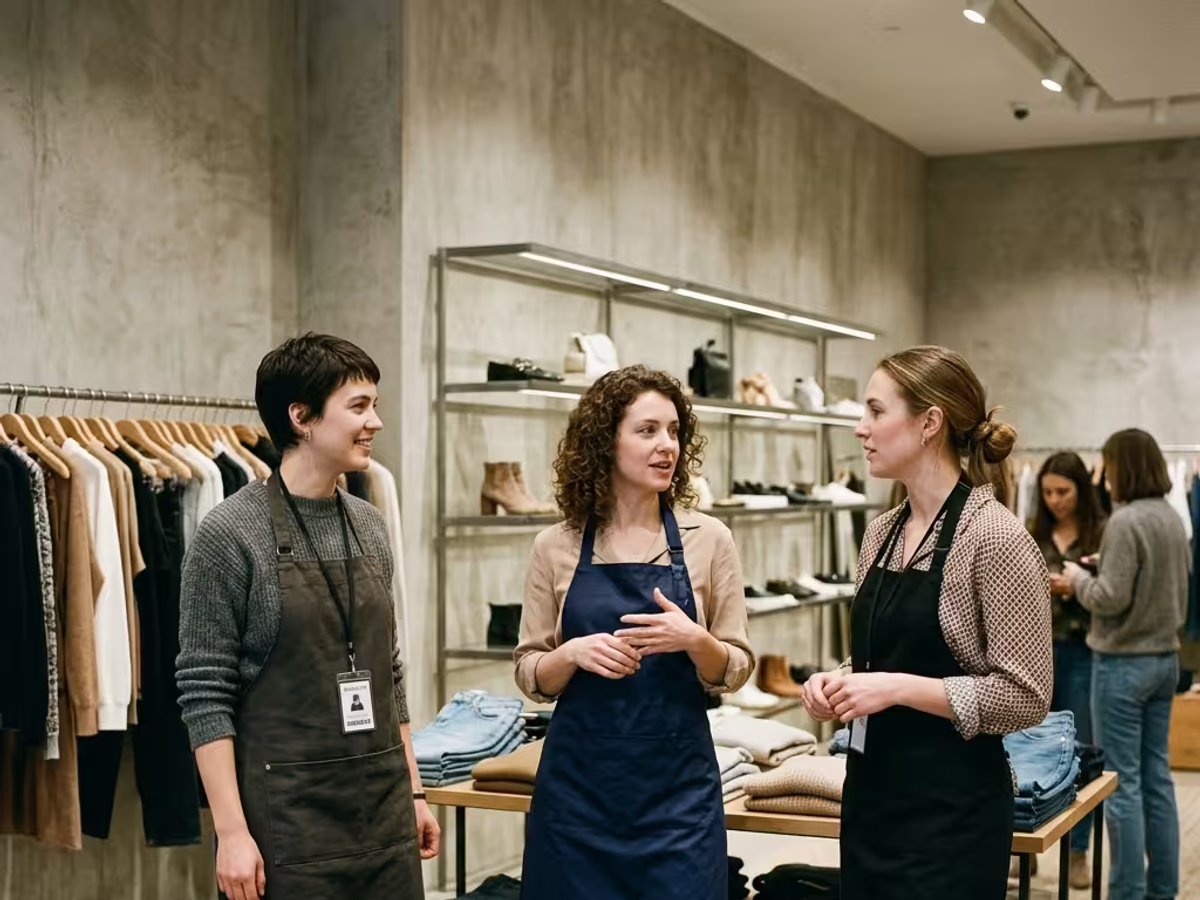
This 14-store retail chain had built its market position on value pricing over a decade. When market dynamics shifted — with new competitors entering the value tier and customer demographics evolving — the board decided to reposition upmarket. The challenge was that every operational element, from store fixtures to staff presentation, communicated "mid-tier." Customer focus groups revealed a striking insight: when asked what single element most influenced their perception of a store's quality tier, 62% cited "how the staff look." Above store design (18%), product packaging (12%), and advertising (8%). The uniform — a standard polo shirt with embroidered logo and off-the-rack chinos — was the single most frequent point of contact between the brand and the customer. If the repositioning was going to succeed, the uniform had to change first. The chain's CEO described it as "the quickest way to make every customer, in every store, in every interaction, feel the brand has moved upmarket." UNEOM was engaged to design and deliver a uniform programme that would signal premium positioning through material quality, tailoring precision, and design sophistication.
From polo to tailoring: the design transformation
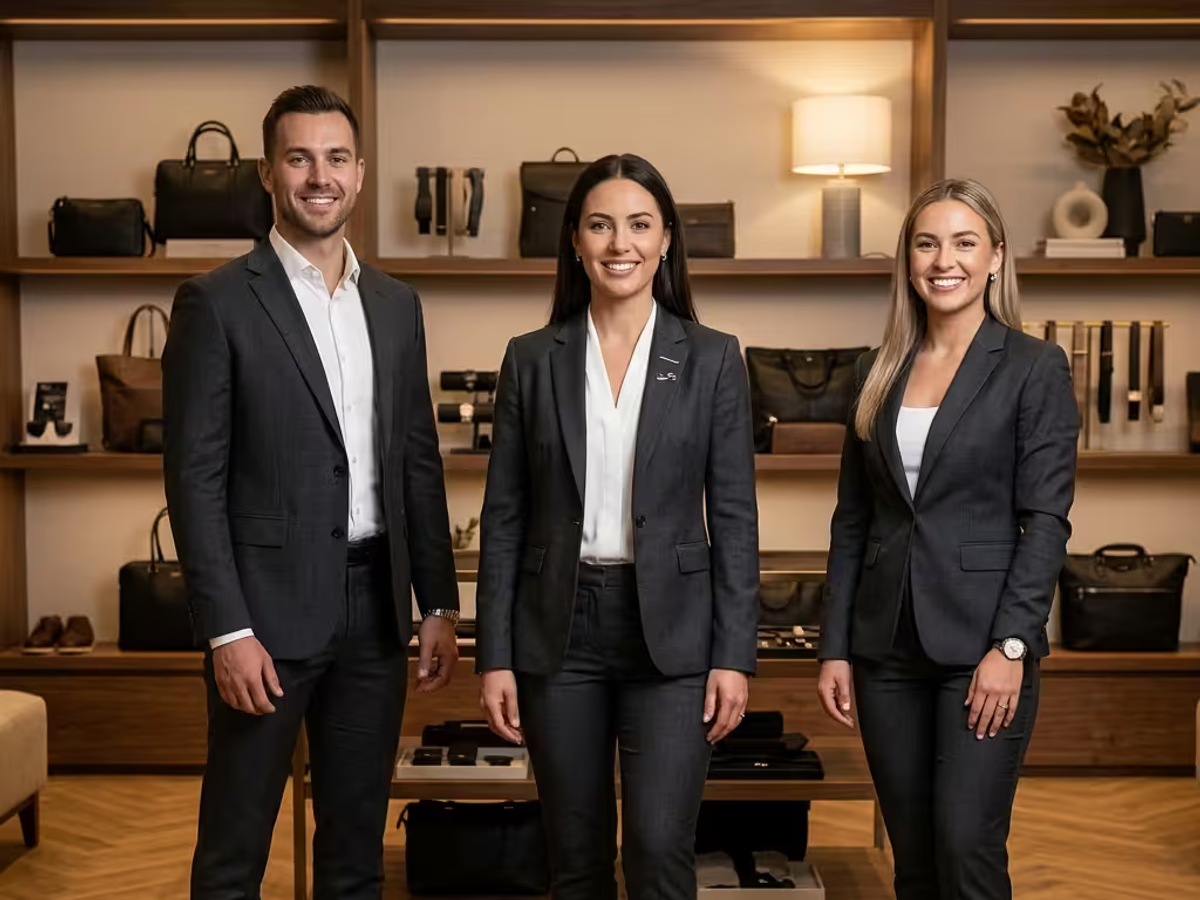
The design shift was deliberate and dramatic. The previous uniform — cotton polo shirt, standard chinos, no structure — communicated casual accessibility. The new programme communicated quiet authority. For sales associates: a wool-polyester blazer (55% wool, 45% polyester) in the brand's signature deep navy, paired with a white cotton poplin shirt (140 thread count, wrinkle-resistant finish) and tailored trousers with a pressed crease. The blazer features a half-canvas construction — a tailoring technique typically reserved for premium menswear, where a floating canvas interlining is hand-stitched between the fabric and lining to provide natural chest drape and shape memory. For store managers: the same blazer elevated with a unique lapel pin, premium horn buttons replacing the standard resin set, and a subtle pinstripe lining in the brand's secondary colour. For visual merchandising and stockroom teams: a structured V-neck sweater over the same poplin shirt — maintaining the elevated aesthetic while providing unrestricted mobility for physical work. Custom-engraved buttons carry the brand monogram; all garments feature the brand crest at the breast pocket position, embroidered on a pre-made patch to ensure consistent sizing and placement across 180 garments.
Fabric specification for premium positioning
The fabric selection was critical — the difference between "looks expensive" and "looks like it's trying to look expensive" lives in hand-feel, drape, and how the fabric ages. For the blazer, we specified a Super 110s wool-polyester blend: the wool provides the soft hand-feel, natural drape, and micro-lustre that signals quality to the touch; the polyester provides crease resistance, dimensional stability through commercial laundering, and extended lifespan in daily-wear conditions. The fabric was sourced from an Italian mill with GSM certified at 240 — heavy enough for structured tailoring, light enough for year-round wear in climate-controlled retail environments. The poplin shirt uses a 140-thread-count Egyptian cotton with a non-iron finish — achieving a crisp, pressed appearance after machine washing without ironing, critical for a programme where 180 staff need to look consistently polished without relying on individual garment care habits. All fabrics were tested to ISO 12945-2 Martindale pilling standards (minimum 20,000 rubs) to ensure the premium appearance is maintained through extended wear.
Fitting and production at scale
Fitting 180 staff across 14 stores for tailored garments — where the tolerance for poor fit is far lower than casual workwear — required a rigorous approach. Our fitting team visited all 14 locations over 6 days, taking 16 measurements per person (compared to the standard 8 for casual workwear). The additional measurements capture sleeve pitch, shoulder slope, chest depth, and back width — critical for blazer fit. We identified four body-type clusters within the staff population and developed four master patterns, with individual adjustments applied per garment. Production was executed on a dedicated tailoring line over 5 weeks: fabric inspection and cutting (Week 1), blazer construction with canvas interlining (Week 2), shirt and trouser production (Week 3), finishing, pressing, and embroidery (Week 4), quality inspection and individual packaging (Week 5). Each blazer passed a 32-point quality inspection — including lapel roll consistency, button alignment (within 2mm tolerance), pocket symmetry, and canvas drape testing. Of 180 blazers produced, 6 required post-delivery alterations (3.3% — industry average for tailored workwear: 8–12%).
Phased deployment and change management
The rollout was coordinated with the chain's broader repositioning timeline — new fixtures, updated signage, and revised merchandising were all scheduled to coincide with the uniform launch. Deployment was phased across three waves: Wave 1 (flagship stores, 4 locations): deployed in Week 8, with professional photography capturing the before-and-after for the chain's internal and external communications. Wave 2 (high-traffic malls, 6 locations): deployed in Week 9, with store managers briefed on the repositioning messaging and trained on garment care protocols. Wave 3 (remaining stores, 4 locations): deployed in Week 10. Each deployment day followed a defined protocol: morning team briefing on the brand repositioning (delivered by the chain's brand team with UNEOM support), individual garment distribution with on-site fit verification, collection of old uniforms, and a team photo for the chain's internal social channels. Staff received a garment care guide — not just washing instructions, but styling guidance: how to fold pocket squares, maintain crease lines, and present the blazer in alignment with the brand's premium positioning.
Measured commercial impact
The business case for premium uniforms was validated by hard commercial data within six months. Average transaction value (ATV): increased 28% in the 6 months post-deployment — the single largest ATV shift in the chain's 12-year history. While multiple factors contributed (pricing adjustments, product range updates, store redesign), the chain's analytics team attributed a "significant portion" to the staff presentation upgrade, based on A/B data from two stores where uniform rollout was deliberately delayed by 4 weeks to serve as controls. Customer NPS: post-visit surveys showed a decisive shift in brand-descriptor language. "Premium" and "luxury" increased 34% as descriptors; "standard" and "basic" decreased 41%. The most significant change was in the "would recommend to a quality-conscious friend" metric, which increased 22 percentage points. Staff engagement: internal surveys showed 92% of staff agreed the new uniforms "make me feel more professional," and 78% reported increased confidence in customer interactions. The chain's HR director noted an improvement in recruitment quality — candidates for sales associate roles increasingly cited "the brand image" as a reason for applying. The programme was renewed for 24 months with a scope expansion to include seasonal accessories (scarves, tie bars, and a limited-edition winter overcoat).