
Beauty Retail Group: Multi-Brand Uniform Standardisation Across 24 Stores
A 24-store beauty retail group operating 6 distinct sub-brands unified its fragmented uniform procurement under a single UNEOM programme — maintaining brand-tier visual differentiation through a colour-coded system while reducing procurement overhead by 60%.
- Client
- Beauty retail group — 6 sub-brands, 24 stores, 320 staff
- Duration
- 14 weeks (design to 24-store deployment)
- Headline
- 6 sub-brands
- Scope
- Multi-brand programme, 320 staff, tier-differentiated colour system, 6 unique sub-brand identities, single-contract procurement
The numbers.
under one programme with tier-differentiated colour system — each sub-brand retains its visual identity within a unified garment platform.
across 24 stores in a single 14-week programme delivery — zero delays against the group's brand launch calendar.
a single contract replaced 6 separate uniform suppliers — reducing administrative overhead by 60% and eliminating cross-brand procurement duplication.
The multi-brand complexity
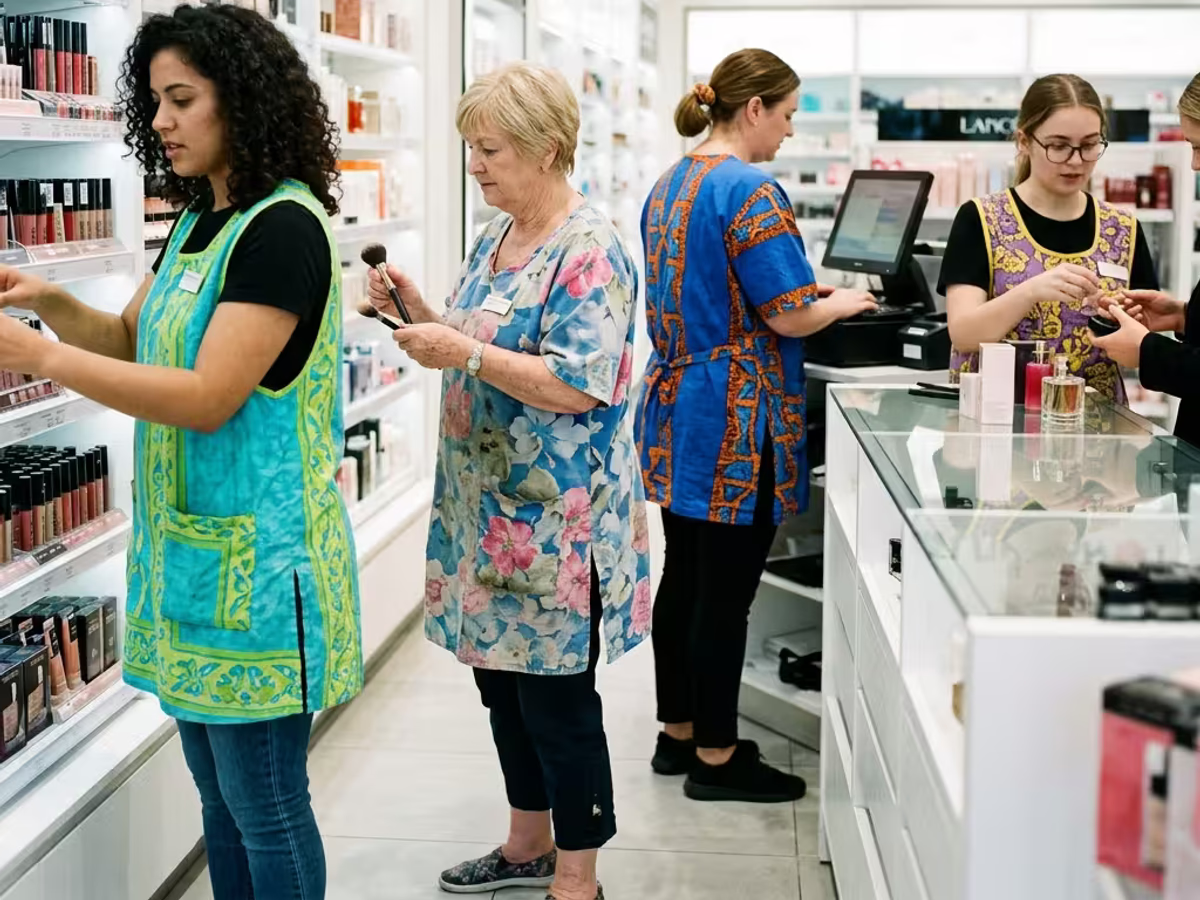
This beauty retail group operates six distinct sub-brands, each targeting a different market segment — from masstige skincare to premium fragrance, from K-beauty to clinical dermatology. Across 24 stores in four Saudi cities, each sub-brand had independently sourced uniforms from its own supplier, resulting in six separate procurement relationships, six different fabric specifications, six different ordering systems, and six different renewal calendars. The group's procurement director described it as "six small problems that collectively became one very large problem." Annual uniform spend across the group exceeded SAR 850,000 — but nobody could pinpoint the total cost because invoicing was distributed across six departments, three regions, and multiple budget codes. Quality was inconsistent: the premium fragrance brand's staff wore Italian-sourced silk blends while the masstige skincare team wore polyester polos that pilled within 8 weeks. Staff transferring between sub-brands within the same mall often had to wait 3–4 weeks for new uniforms, creating a visual disconnect in shared retail environments. The group's CEO mandated a solution: one programme, one supplier, six identities.
The colour-tier architecture
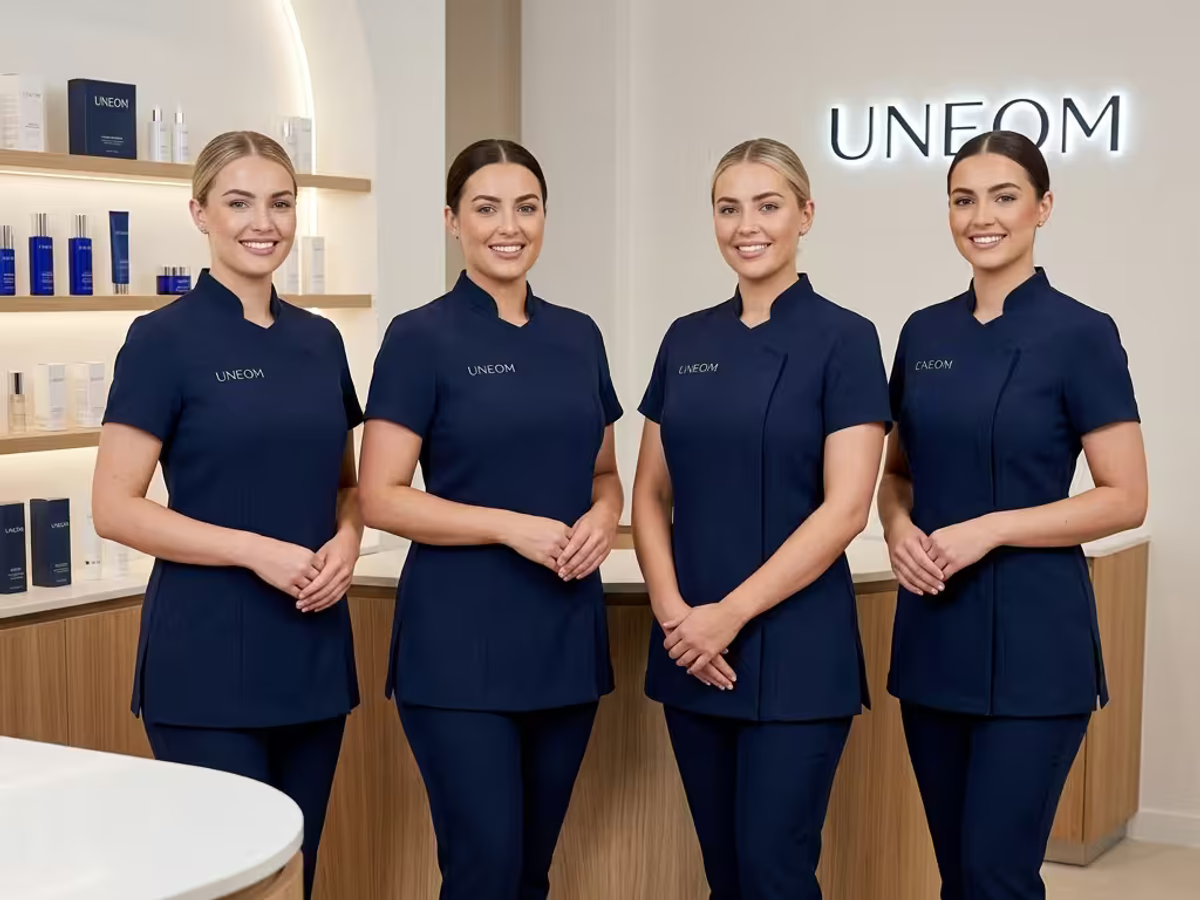
The design challenge was unique: create a unified garment platform that serves six different brand identities without flattening any of them. The solution was a colour-tier architecture — a single garment silhouette manufactured on one production line, with brand identity expressed entirely through colour and accent. Sub-brand A (premium fragrance): deep navy body with gold accent stitching and gold-embossed buttons (Pantone 533 C + 874 C). Sub-brand B (clinical skincare): crisp white body with navy piping and silver-toned buttons (Pantone White + 534 C). Sub-brand C (K-beauty): soft blush body with rose-gold accent stitching (Pantone 5035 C + Rose Gold Metallic). Sub-brand D (masstige skincare): sage green body with warm-cream trim (Pantone 5645 C + 7527 C). Sub-brand E (hair care): charcoal body with platinum accent (Pantone 425 C + Cool Gray 1 C). Sub-brand F (wellness/supplements): warm terracotta body with ivory detail (Pantone 7522 C + 7527 C). Each colourway was developed with brand-specific Pantone matching, verified under the fluorescent lighting profiles used in each sub-brand's retail environment. The silhouette remained identical: structured tunic with mandarin collar for sales associates; matching blazer for store managers. This approach allowed UNEOM to manufacture all six variants on a single production line with colour-change scheduling, dramatically reducing production cost and lead time.
Unified fabric platform
While colours differentiated brands, the fabric specification was standardised across all six sub-brands — a strategic decision that unified quality, simplified inventory management, and enabled cross-brand garment production on a single line. The base fabric: a performance jersey blend (58% polyester, 37% viscose, 5% elastane) at 200 gsm, engineered for the beauty retail environment. The viscose content provides a soft, luxurious hand-feel appropriate for premium beauty brands — a tactile signal of quality that customers register unconsciously when staff assist with product application. The polyester content delivers wrinkle resistance, colourfastness, and durability through commercial laundering. The elastane provides comfort stretch for staff who spend 8-hour shifts standing, reaching, and demonstrating products. The fabric received four technical treatments: (1) anti-pill finish (tested to ISO 12945-2, 5,000+ Martindale cycles); (2) moisture-wicking inner surface for temperature regulation; (3) stain-release outer finish resistant to foundation, lipstick, and fragrance oil — critical for beauty retail staff who handle product demonstrations; (4) anti-static treatment to prevent fabric cling and lint attraction in cosmetics-heavy environments. All six colourways were dyed using a reactive dyeing process to achieve colourfastness to ISO 105-C06 (Grade 4–5 after 50 cycles at 60°C).
Group-wide fitting and sizing
Fitting 320 staff across 24 stores, spanning six sub-brands with different aesthetic standards, required systematic efficiency. Our approach: a 3-day sizing blitz across four cities, with a team of six garment technicians working two stores per day. The digital sizing system captured 12 measurements per person, feeding directly into our grading system to minimise post-production alterations. The sizing data revealed an insight that improved the programme: the beauty retail workforce skewed heavily toward sizes XS–M (78% of staff), with a higher-than-average proportion of petite frames. We adjusted our grading system accordingly, developing a "petite fit" variant for sizes XS and S that shortened torso length by 3cm and narrowed shoulder width by 2cm — ensuring that the mandarin-collar tunic sat correctly on smaller frames without the "swimming in fabric" effect common with standard retail sizing. This adjustment was applied across all six sub-brands, reducing the alteration rate from a projected 12% to an actual 4.2% — saving 26 post-production alterations and their associated logistics costs. Buffer stock was configured to reflect the size distribution: 45% of stock in XS–S, 33% in M, and 22% in L–3XL.
Single-contract procurement transformation
The operational transformation was as significant as the visual one. Before UNEOM, the group's uniform procurement involved: 6 separate supplier contracts with different terms, pricing, and SLAs; 6 different ordering processes (two via email, two via WhatsApp, two via phone calls); 3 regional procurement managers each handling 2 sub-brands; no centralised visibility into total spend, inventory levels, or replacement cycles; and an average 3–4 week lead time for joiner kits (with one sub-brand averaging 6 weeks). After UNEOM: a single contract with unified pricing across all six sub-brands, achieving volume discounts unavailable at individual sub-brand scale; a single digital ordering portal accessible to all 24 store managers; one UNEOM programme manager as the single point of contact for the entire group; real-time inventory visibility across all six colourways and all size ranges; and a standardised 72-hour joiner-kit SLA (48 hours for Riyadh, Jeddah, Dammam; 72 hours for other cities). The procurement overhead reduction was immediate and measurable: the three regional procurement managers collectively reclaimed 25 hours per month previously spent managing six supplier relationships — time redeployed to strategic vendor management across other product categories.
Financial and operational results
The programme's financial impact was measured at the 12-month mark across three dimensions. Direct cost savings: total annual uniform spend decreased from SAR 850,000 to SAR 612,000 — a 28% reduction. The savings were driven by: bulk-contract pricing across 320 garments (vs. 6 separate small orders); standardised fabric specification eliminating premium pricing on sub-brand-specific materials; and extended garment lifespan (mean 11 months across all sub-brands, vs. 7 months previously) reducing replacement frequency. Indirect cost savings: the 60% procurement overhead reduction — measured in manager hours — was valued at approximately SAR 95,000 per year in reallocated labour cost. The elimination of emergency procurement (previously averaging 8 emergency orders per month across the group, each carrying a 35% surcharge) saved an additional SAR 42,000 annually. Brand coherence: while each sub-brand maintained its distinct visual identity through the colour-tier system, customers in shared mall environments (where multiple sub-brands operated adjacent stores) reported increased awareness of the group's portfolio connection. The group's marketing team leveraged this for cross-brand promotions, increasing inter-brand customer migration by 14%. The programme contract was renewed for 36 months — the longest uniform contract in the group's history — with scope expanded to include seasonal accessories and a pilot programme for branded tote bags issued to loyalty-tier customers.