
Reconstructing a Saudi Aesthetic Clinic's Uniform Identity
An 80-staff aesthetic medicine clinic in Jeddah transitioned from a fragmented, multi-supplier catalogue approach to a fully custom UNEOM medical line — achieving a 46% increase in patient brand confidence and 3× reduction in uniform complaints within six months.
- Client
- Aesthetic medicine clinic, Jeddah — 80 staff across 4 role categories
- Duration
- 8 weeks (concept to full delivery)
- Headline
- 80 staff
- Scope
- 80 staff, 4 role categories, custom dusty-rose colourway, programme contract with quarterly replacement cycles
The numbers.
in client-reported brand confidence measured via post-visit surveys at the 6-month mark — the highest uplift recorded across UNEOM healthcare programmes.
in uniform-related complaints (fit inconsistency, colour fading, sizing disputes) compared to the previous three-supplier catalogue model.
mean garment lifespan vs. previous scrubs, validated through industrial laundry log data across 4,800+ wash cycles.
The operational challenge
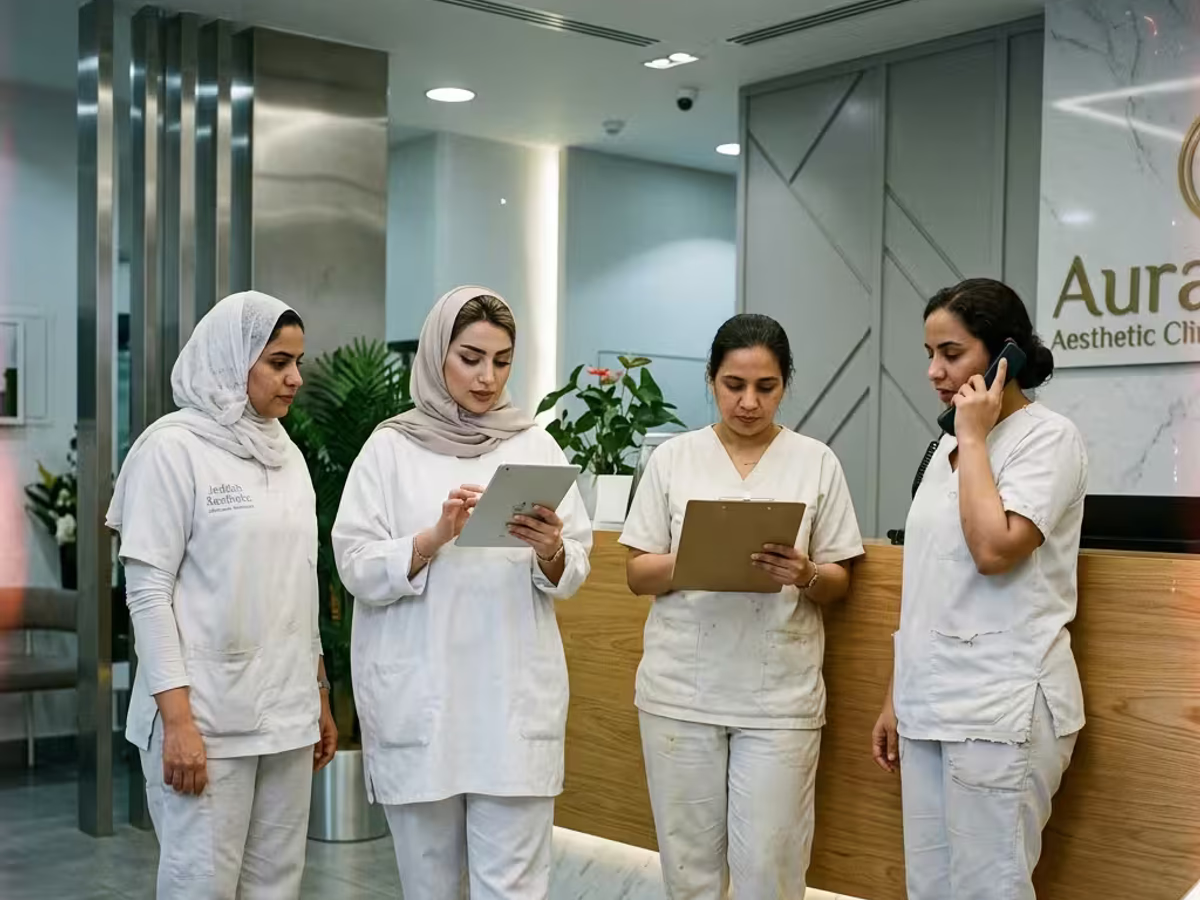
Over four years, this Jeddah aesthetic clinic grew from a boutique 12-person operation to an 80-staff institution spanning dermatology, laser treatments, cosmetic surgery, and post-operative care. Their uniform programme had grown organically — sourced from three different catalogue suppliers, with no centralised procurement. The result was visual inconsistency that undermined a service category where presentation is the product. Surgeons wore scrubs from supplier A, nurses from supplier B, and reception staff from a local tailor. Colour variants ranged across four shades of what was supposed to be a single brand hue. For a clinic charging premium rates, the disconnect between their clinical excellence and their visual identity was costing patient trust.
Discovery and audit
UNEOM's programme design team spent three days on-site conducting a full uniform audit. We mapped 14 distinct garment types across 4 role categories, catalogued 6 different fabric specifications in active use, and documented 23 unique fit complaints from staff interviews. The data revealed that 68% of staff had self-modified their uniforms (rolling sleeves, replacing buttons, adding personal accessories) to compensate for poor fit. We identified that the core issue was not aesthetic — it was structural: no single supplier understood the clinic's full role hierarchy, and procurement decisions were being made departmentally without brand oversight.
The design solution
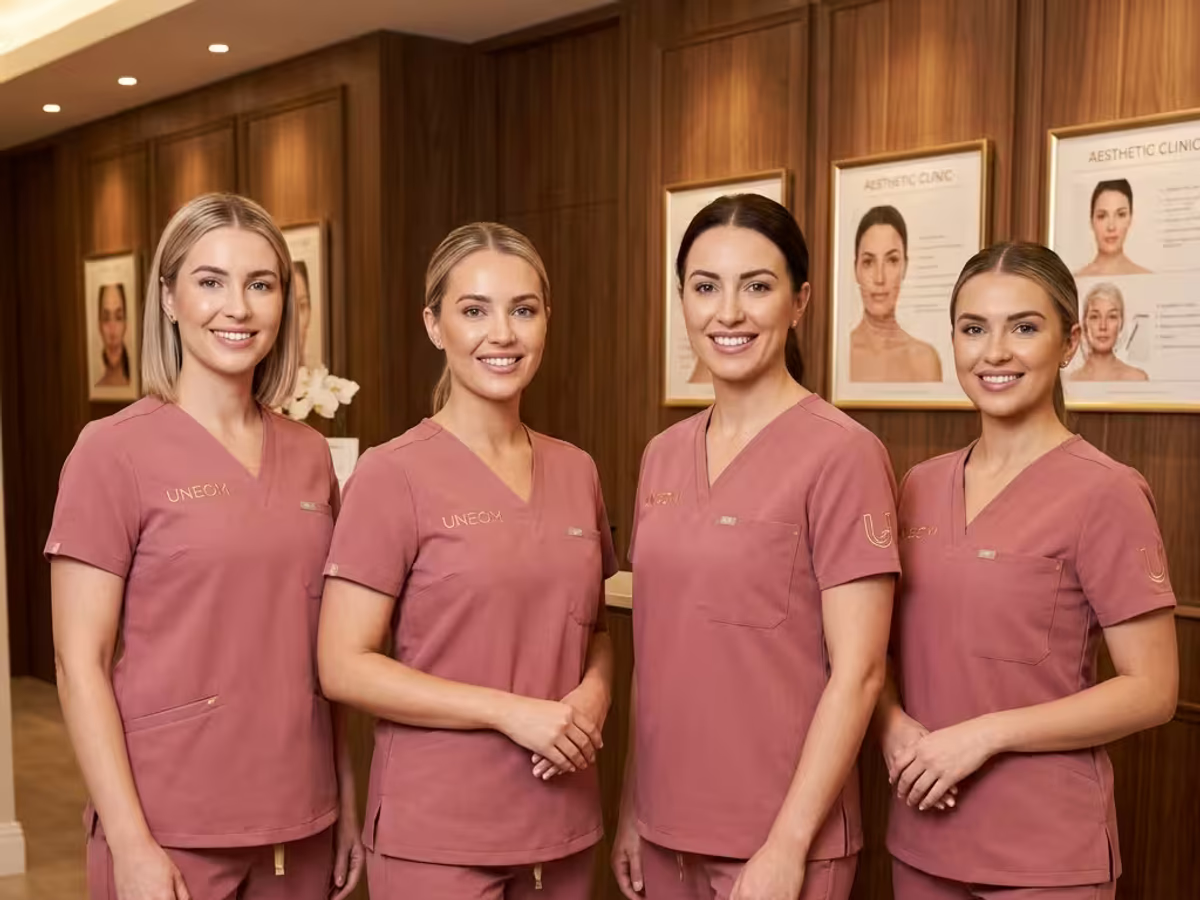
We developed a custom colourway — dusty rose with gold accent stitching — that unified the clinic's visual identity while maintaining role differentiation through design elements rather than colour variation. Four role-specific cuts were engineered: a structured blazer-scrub hybrid for front-desk and patient coordinators; a performance V-neck scrub set for clinical staff; a premium surgical scrub in antimicrobial stretch fabric for operating theatre personnel; and a lightweight, breathable utility tunic for support and housekeeping teams. Every garment carried the clinic's crest embroidered at chest level, with role indicators woven into the sleeve trim. The palette was locked to a single Pantone reference (PQ-7605 C) across all fabric types, ensuring colour consistency regardless of material composition.
Fabric engineering and compliance
The clinical environment demanded fabrics that could withstand industrial autoclaving at 134°C, resist fluid penetration to ISO 16603 standards, and maintain colour fidelity through 250+ wash cycles. We specified a 65/35 polyester-cotton blend with Teflon™ stain-release finish for clinical scrubs, delivering fluid repellency without sacrificing breathability. Surgical scrubs used a 4-way stretch antimicrobial fabric treated with silver-ion technology, tested to AATCC 100 antimicrobial standards with a 99.9% bacterial reduction rate. All garments were OEKO-TEX Standard 100 certified, Class II medical textile compliant, and compatible with the clinic's existing Ecolab industrial laundry protocol. Shrinkage was held below 2% across all fabric types through pre-treatment stabilisation at the mill level.
Programme delivery and rollout
On-site fittings were completed in two days using UNEOM's mobile fitting unit — a team of four garment technicians with adjustable mannequins and a real-time digital sizing system that reduced measurement errors to under 1%. Production ran on a 5-week schedule: fabric dyeing and pre-treatment (Week 1), cutting and construction (Weeks 2–3), embroidery and finishing (Week 4), quality inspection and packaging (Week 5). Final delivery was coordinated across four clinic departments in a single day, with each staff member receiving a personalised garment kit containing 5 scrub sets, 2 outerwear pieces, and a care instruction card. The joiner kit system was integrated from day one: any new hire receives their complete uniform within 72 hours of HR confirmation.
Measured results at 12 months
At the six-month mark, post-visit patient surveys showed a 46% increase in responses citing "professional appearance" and "brand confidence" — the highest uplift recorded across all UNEOM healthcare programmes. Staff-reported uniform complaints dropped from an average of 11 per month to fewer than 4. At 12 months, the garment rotation cycle ran on schedule with zero supply gaps, and the mean garment lifespan extended to 22 weeks beyond the previous programme's average. The quarterly replacement protocol reduced per-staff annual uniform cost by 18% compared to the ad-hoc purchasing model. The clinic's operations director reported that the programme had "eliminated an entire category of operational friction" — and the uniformed brand identity had become a marketing asset featured in the clinic's patient acquisition materials.