
Service
Sustainable Uniforms
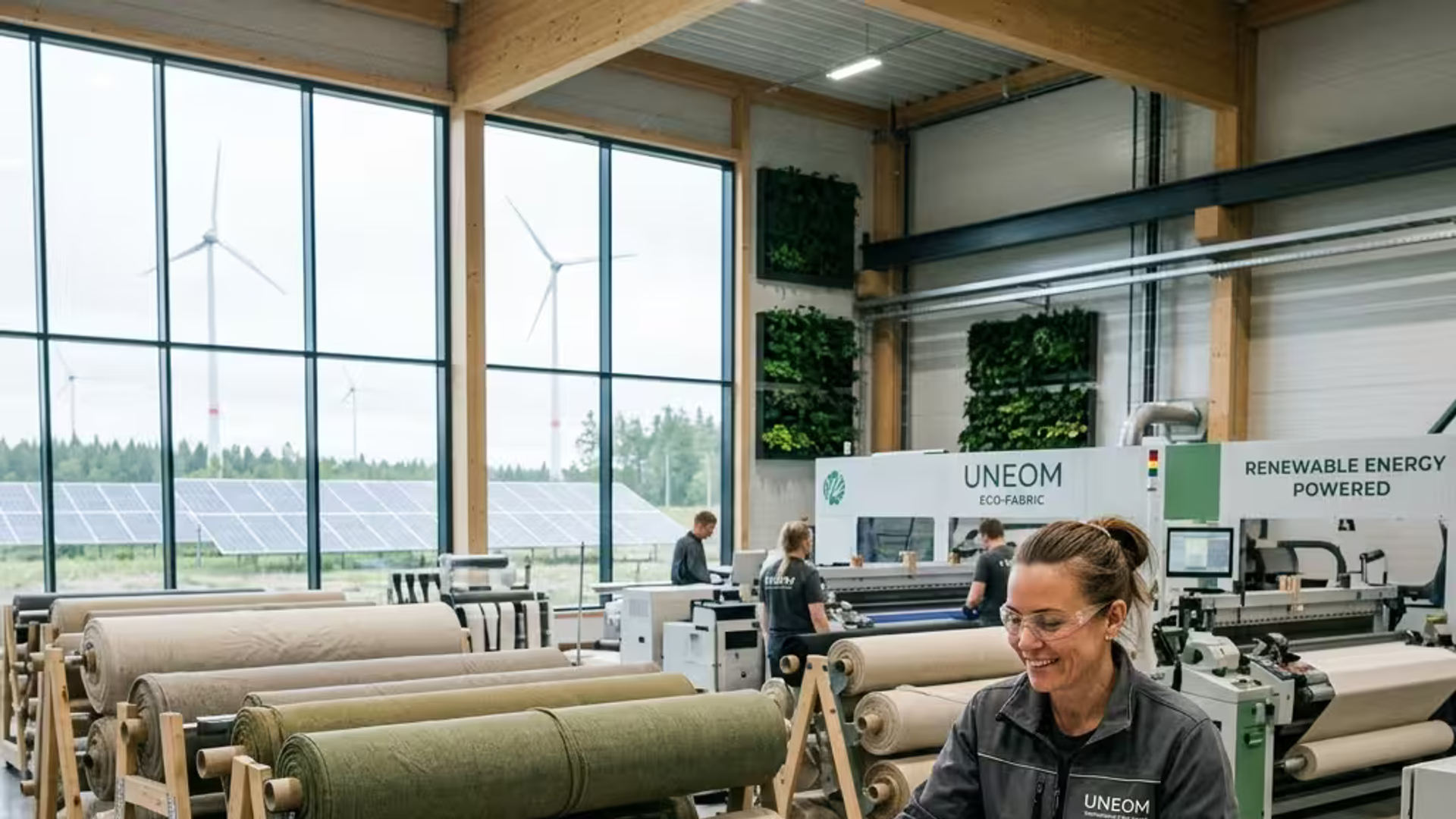
OEKO-TEX-certified fabrics, recycled-poly options, end-of-life take-back, and Vision 2030 compliance.
OEKO-TEX
Standard 100 certified
12
PET bottles per recycled shirt
85%+
landfill rate reduced
GOTS
organic cotton certified
OEKO-TEX Standard 100 certification on the full healthcare line, recycled polyester options across hospitality and retail, and a take-back programme that recycles end-of-life garments into industrial wipes.
Outcome metric
OEKO-TEX
certified textile programme
01
Why sustainability matters for Saudi uniform programmes
Vision 2030's Saudi Green Initiative sets explicit targets for waste reduction across all industries. Uniforms are a significant contributor to textile waste — a 500-employee programme generates approximately 2,500 garments per year at standard replacement rates. When those garments reach end-of-life, most go to landfill. Saudi Arabia's waste-to-landfill rate for textiles exceeds 85%. For enterprises pursuing ESG reporting, LEED certification, or Saudi Green Building Code compliance, the uniform programme is a visible, measurable line item. UNEOM's sustainability programme addresses three layers: sourcing (certified fabrics), durability (longer replacement cycles reduce volume), and end-of-life (take-back and recycling).
02
Certified fabrics and recycled-poly options
Every UNEOM healthcare garment is OEKO-TEX Standard 100 certified — tested for over 100 harmful substances at every production stage, from raw fibre to finished product. For hospitality and retail lines, we offer recycled-polyester fabric options: fibres derived from post-consumer PET bottles, spun into yarn with identical performance characteristics to virgin polyester. A single recycled-poly uniform shirt diverts approximately 12 PET bottles from landfill. Performance is not compromised — recycled-poly fabrics in our rotation pass all 7 textile lab tests at the same thresholds as virgin-poly equivalents, including 80+ wash cycle durability. We also source organic cotton for premium corporate lines — GOTS-certified, rain-fed cultivation, no pesticide residue.
03
The take-back programme
When garments reach end-of-life in a UNEOM programme, they don't go to landfill. Our take-back programme works in three stages: (1) Collection — we pick up end-of-life garments during regular delivery runs, so there's no additional logistics cost or scheduling. (2) Sorting — garments are inspected and sorted: items in good condition are sanitised and donated to workforce housing programmes; worn-out items proceed to recycling. (3) Recycling — textile waste is shredded and converted into industrial wipes and insulation material through our recycling partner. For ESG reporting, we provide quarterly take-back certificates showing the volume diverted from landfill, measured in kilograms. The certificate is audit-ready for LEED, Mostadam, or ISO 14001 compliance.
Ideal for
Is this service right for your organisation?
01
Organisations with ESG reporting obligations or sustainability KPIs
02
Healthcare institutions requiring chemical-safety-certified textiles (OEKO-TEX)
03
Enterprises pursuing LEED, Mostadam, or ISO 14001 compliance
Next step
Add Sustainable Uniforms to your programme.
Programmes start with a conversation. Tell us about your team size, industry, and the cities you operate in — and we'll build a tailored proposal within one business day.